Editor’s Note: Discussions of craft and pedagogy often lend fascinating insights into unique perspectives on the world. MockingHeart Review recently sat down with prolific poet and educator Bill Cushing to discuss his philosophies of teaching, how his past and present influence his writing, and his excellent new poetry collection A Former Life (Finishing Line Press, 2019), available from the publisher here. The resulting conversation led into rich literary territory.
Tyler Robert Sheldon, Editor-in-Chief
MockingHeart Review: Hi, Bill. Congratulations on your new poetry collection A Former Life, out recently from Finishing Line Press! You identify your poem “In Pink Neon” as perhaps the first serious poem you’d written, which is always a fascinating label to unpack. Could you speak to why you’ve identified it thus, and how it may have impacted your work from that point forward?
Bill Cushing: Thanks for the nod on the book. It’s great to finally have my thoughts, impressions, and memories out in the public square—especially at my age. Concerning the particulars about “In Pink Neon” as my first “serious poem,” the question actually requires a long explanation simply because that piece was a long time in coming. For starters, to say that I came to poetry—or any kind of creative writing for that matter—through a weird side door would be an understatement.
After high school, I planned on going into journalism. However, those plans were put on hold because of a low draft number during the Vietnam era. I ended up enlisting in the Navy and spent the bulk of my time serving on destroyers, mostly chasing Soviet ships and subs around the Atlantic. Following my discharge, I continued working as a marine electrician over the next 15 or so years, with time mixed in as a bartender, cabbie, truck driver, or retail salesperson. By the time I returned to formal education, I was 35 but not really sure what I wanted to do. Being a Cold War baby and having served during the high point of that era, my first area of interest was history or, possibly, humanities. I wasn’t considering a return to writing even though during the years before, I had kept personal journals and read a lot.
Then, one of my first English professors saw potential in my writing and encouraged me to join a newly-instituted campus newspaper, an offer I jumped on after learning scholarships were awarded to editors. While attending a statewide journalism conference, I signed up for a workshop that was named, quite simply, “How to Improve Your Writing.” That session was pretty short because the woman facilitating it told those attending, “If you want to improve your writing in any field, start writing poetry.”
She spent the rest of the time explaining how poets practice self-discipline and learn to use language as efficiently as possible, wringing as the most meaning and imagery out of each word employed. I liked her presentation and promised myself to try it out as soon as I could. The opportunity came a lot sooner than even I expected.
On the last evening of that weekend, while out jogging, I passed by one of those old railcar-style diners. Now I love eating at “greasy spoons,” so the following morning I convinced the rest of the group to stop there for breakfast on the way out. Once inside, I started jotting down notes about the place since it brought me back to my youth in New York City. Those notes led to that poem, which I wrote trying to replicate a Tom Waits musical mode.
From that point on, the thought of returning to journalism was pretty much out, along with the idea of majoring in history. That’s not to say I broke off my mass media relationship immediately. I continued working on my campus newspapers, becoming editor in chief of both my community college and university papers, as well as the editor of my college lit mag. In addition, I put out a local arts and entertainment magazine in Jacksonville that did really well, wrote book reviews for both newspapers and magazines, and freelanced production and editing gigs while attending the University of Central Florida.
However, I latched onto poetry and other forms of creative writing, focusing on the poem as a vehicle for interpreting and presenting the world as I perceived it. The longer I became involved in poetry, the more it appealed—nearly possessed—me. It was one happy accident.
MHR: You earned an MFA in Creative Nonfiction from Goddard College. How do you think that particular genre focus has impacted your perception and understanding of poetry? How did that focus influence the creation of A Former Life?
BC: It’s funny, because I entered my graduate studies with the idea of veering away from poetry for two reasons. First, even though I had written in other formats and genres, I wanted to focus my creative work on something the complete opposite of poetry. To my mind, the novel seemed to be the perfect vehicle given its scope and breadth.
In addition, I chose to enter an MFA program over a PhD after reading an essay on the novel by Anthony Burgess, the modern English writer I most admire. In his piece, Burgess insists that anyone who wants to teach writing, which had become my primary goal at that point, needed to undertake the effort to complete a novel. Even if it was badly written, Burgess posited that only those who had undertaken such a task were qualified to teach writing on any level.
So, I saw this as an opportunity to write an extended piece of work as opposed to the compactness of the poem while giving me the needed insight to become a competent instructor. After all, who was I to contest Anthony Burgess?
When I began, my intention was to write a novel based on my years as a “yard bird” while using the Norwegian folktale of Peer Gyn as the template. It’s a national folk legend I’ve long admired and a character I have identified with myself. However, as with most of life, reality interrupted those plans—my wife’s cancer recurred. She died from the disease not long after I finished my first semester. I took some time off but returned obsessed, telling my advisors to forget the novel: I wanted to write a book about our relationship with each other and dealing with the disease. That creative thesis became both my focus and, to a large degree, my therapy for the next year and a half.
I still wrote some poetry; in fact, I came away with two poems about Puerto Rico and a third that didn’t pan out as a poem, but that proved helpful as the set-up in a short story. However, detailing the story of our lives and her death became the focal point of my writing. It is a project that I hope to return to next year after I retire, when I’ll have more time to devote to the amount of editing needed to make the project more marketable.
But to answer the question concerning the two formats of writing, I’d have to say that, while I find no direct connection between my writing poetry as opposed to writing prose, having delved deeper into both has allowed me to more fully understand that sometimes the writing itself has to adjust to the thematic elements, whether they are image, emotion, or observation.
In other words, I have become better connected to a phrase I often use when teaching writing, namely that “form follows function.”
MHR: In your poem “Sailing,” dedicated to Joseph Conrad, you discuss the parallel between our modern lives and an older role in the world that few now know. How do you feel that our current, immersive technological world influences the ways we write? Also, what do we notice, when we put away that newer part of ourselves?
BC: That’s an interesting question, and the irony is that although I spent most of my younger days working on tech-related items, they’ve never enamored me. There are many reasons for that, and I even have an entire hours-long “rant” on why telephones are damaging to us as individuals. I still open my classes telling students that my definition of cell phones and related devices is that they are “electronic leashes.” They laugh but have no idea how serious I am. Hell, I still use a flip phone, and it took my wife over a year of arguing to convince me to carry that. Were it not for a severely disabled son, I might never have agreed. So, my focus has never really been on technology, even though I know its capabilities and understand its usefulness.
One moment that answers your question happened back in the late 1970s as VHS camcorders began getting smaller in size and lower in price—one the beautiful aspects of technology by the way: it is one of the few areas where one’s dollars are worth more today than in the past. And that may constitute its “addictive” nature for us in always wanting to possess the newest gadgets with all their attendant bells and whistles. At any rate, I was in an art museum and noticed some guy walking around with the viewfinder of a VHS camera plastered to his eye.
All I could think was how this fool was so caught up in recording every step, his entire experience surrounded by these great works of art was relegated and reduced to whatever was within the lens. It impressed me as being a very limited view of the world; there was no peripheral vision going on there. And therein lies the beauty of sailing to me, namely the totality of the experience instead of the “snapshot” that is the limited view technology offers—no matter how high the resolution.
Another factor is that I grew up on the water and have been sailing since probably five years old. It is an activity I still use to decompress. I belong to a regional sailing club and try to get out at least once a month even if only for a few hours. What I enjoy is the combination of the cerebral with the physical, which is actually one of the things I enjoyed about working as an electrician: to do either well takes knowledge, foresight, and insight, along with some serious sweat.
Those aren’t limited to just my personal pursuits, either. I’m certain people who engage in rock climbing, camping, or horseback riding get the same thrill and satisfaction that sailing gives me. Those activities allow them to, as you imply, “disconnect” from the wired world in which we now exist. In the end, perhaps that is the best way to discern things: it is the difference between “existing” and “living.”
MHR: Also in “Sailing,” you end on the lines “the sun / finds the seam in the weld / that fixes sea to sky.” These lines are a wonderful example of deft alliteration and metaphor, and I find myself returning to them many times over. That seam in the weld is on one level the horizon, but I wonder how it could apply to other facets of our lives. Could you share your thoughts on that final stanza, and how you feel it shapes the rest of the poem?
BC: Those lines actually created the poem, or at least the “source” sentence did. I built the poem around that image of the sea and sky meeting in a “seam” while reading Conrad’s Heart of Darkness for a class. That, of course, is why I dedicated the poem in his name since his writing had such an influence over my own creation in this case. In that novel’s opening chapter, Conrad writes of the sea and sky as being “welded together without a joint.” The descriptive nature of the horizon as two parts blended together captivated me. I had been working on notes for a poem to try and capture my love of sailing, or of just being shipboard for that matter, as well as conveying why the early morning watch was always my favorite because of the solitude it contained along with the chance to witness the metamorphosis of night moving into day. While putting things together, I struggled with the term “daybreak” because “break” connotes a violent or at least a forceful action. I never saw the sunrise as being that way, but the idea of the sun seeping through and separating the horizon into its components, like it had a seam, conveyed the image perfectly. Reading that struck the absolute proper chord with me.
After that, it was simply a matter of working back to the start of the poem once the last line anchored the poem (pardon the pun).
MHR: Your poem “With Dad” is stirring and poignant, as the narrator tries on their late father’s jacket. Without giving too much away, we see that the jacket and the narrator don’t quite match. Does the message of or impetus behind this poem surface in A Former Life in other ways?
BC: Short answer to the question: Oh yes! Notice how often he shows up in the first segment of the book. My father was an imposing and very dominating figure, and that wasn’t just to me but to everyone. He was extremely accomplished, and anyone who knew him, whether personally or professionally, would likely attest to the length of the shadow he threw. Thus, the notion of wearing my father’s jacket and still not measuring up to him was what led to that poem.
A safe assumption is that all sons intuitively understand how hard it is to find our own place in the world and come out from under the figure of our fathers, and my life was heavily influenced (and in many ways limited) by trying to match or satisfy him. It took me years to comfortably become my own person, a notion that relates very directly to the title for the book as much of the work in those pages as having been the result of a “former life,” that life I spent as his son.
It is a bit ironic that one real, personal connection between my dad and me came after my mom’s death. I think it was the first time I had experienced something he hadn’t until then, namely the death of a wife, and that made us equals in his eyes.
MHR: In both poetry and visual art there exists the notion of finding the universal in the personal—interpreting a story or image as applicable to our own lives, as perhaps even holding answers to long-pondered questions. As a poet, how do you filter the world onto the page? Do you see universal messages in A Former Life, and if so, could you speak to them here?
BC: While my post-secondary education focused on creative writing, the pragmatic part of me—what some might call the “rational” brain—still needed answers of a practical nature. As a result, one of my first “quests” as I dove into writing poetry was how to define it. That leads to another long story that actually has been published as an essay, but the conclusion is that I view poetry as the “history of the human soul.” That definition covers all aspects of the art wonderfully for me, appealing to both the poet and the historian.
Perhaps another way of looking at it is to recall the words of American novelist John Gardner who said that there are no new ideas or stories, that the job of any writer is to simply present what he called “those immutable and eternal truths” into the vernacular of each writer’s particular generation.
So what I hope my poems achieve becomes twofold: a way for those of my generation to recall and relive their own lives while also acting as a “time capsule,” allowing later generations to better understand how the post-World War II “Baby Boomers” grew up.
MHR: I am struck by how you approach poetry—many of your poems seem to value economy, saying quite a lot in relatively few lines. Would you share your thoughts on what constitutes an effective poem—whatever that word might mean from your perspective?
BC: I guess I have to circle back to my opening statements concerning how I got involved in poetry to begin with: as an exercise in creative self-discipline. That’s if one can comfortably hold those two seemingly opposite practices in mind at the same time.
I have lately taken to a new practice in my writing and am now working within specific and more “traditional” poetic formats: the ode, the madrigal, the decima, the sestina, and so forth. Some of those works did make it into the book, but most of them are newer. That has been a fun ride in that, by forcing myself to stay within the boundaries of those structures, I have returned to the practice of learning how to use language with greater effect and more precision.
Here is where the “teacher” in me takes over since one of my mantras in writing is that “the most important part of writing is rewriting.” That is one constant refrain I’ve heard and from some pretty heavy hitters in the writing world, including Gwendolyn Brooks and Philip Levine. However, even there, things need to be fluid.
Those who’ve ever practiced transcendental meditation have had the experience of “opening up” their consciousness by narrowing their focus to a single image or totem. It is the dichotomy of branching out by closing in, if only for the moment. It is exhilarating as hell, but it is neither easy nor guaranteed. However, if I find I’m not getting the image, the emotion, the “message” if you will, that I’m trying to get across, I can change the work up by either trying another format or letting the writing go its own way.
I think an example that makes this clearer is seen in how I present writing the thesis sentence to my comp classes. I present the students with a seven-part “model” sentence that constitutes a complete thesis, but I qualify it by telling them, “Even if you fall short of achieving every aspect of this, you’ll still have a better result in having tried to get there.”
To use two pieces from the book as illustration, “With Dad” came to me almost instantaneously. As soon as I turned toward that mirror and looked at myself in his jacket, the seed of still not approaching his stature was planted. The poem was roughed out while waiting for my flight home after his memorial and actually required few revisions on its way to becoming what it became. On the other hand, “What Love Is” is a sonnet focused on our son and was an excruciating experience to get right until another seemingly unrelated image presented itself coupled with my decision to adhere to the sonnet form for that piece. Do the two pieces work? I believe so based on the reactions I’ve gotten from various readers who have gone out of their way to mention those two in particular.
So the question becomes: what makes them work so well? Is it the writing or the emotions behind the writing? I assume it is both in varying and properly stabilized degrees. Recall Oscar Wilde’s statement that “true emotion leads to bad poetry,” so once one can balance the discipline with the passion, then the writer is “firing on all cylinders.”
MHR: What are your plans now that A Former Life has found its life in the world? Do you have any project(s) in mind or underway?
BC: I have two chapbooks underway, one completed and the other in the last stages. The finished product has already been sent to several places for consideration while the “incomplete” one needs only some fine-tuning with some critical reviews of two recent pieces I want to include. Of course, I still write actively and continue submitting to journals and anthologies. I will look over what I’ve assembled for later consideration as a complete second book.
As mentioned before, once I have the time freed up from my teaching, I plan to dive back into the book about my previous marriage and in particular how people deal with terminal illness. That work is named Counting Down the Breaths, and I actually had an excerpt of it published, so I am optimistic it will be completed. The title came from the fact that I did, in reality, spend her last few hours of life counting down her breathing as she passed away, and its purpose is both to honor our relationship, as short as it was, and to allow those who find themselves as caretakers to understand what their lives may become once cancer or any other serious medical condition enters.
I am still adding material to the initial novel I began, but I’m taking a more “leisurely” approach there. Given the time and energy, perhaps that will become a “whole.” I’ve had some luck with short stories and continue on that path as well.
MHR: Every poet seems to have their own individualized process for building a manuscript. Could you share some tips for poets seeking to organize a collection of poems? Furthermore, how did you seek publication for A Former Life?
BC: I have to give a nod to John Brantingham, a poet laureate in the state and frequent editor I happen to work with at Mt. San Antonio College. His assistance proved invaluable in focusing on this book when I decided to attempt my “quest” to get a collection of work published. His advice let me focus on the “marketing” aspect of the book, which is something writers want to avoid but is, in reality, an important aspect of the task. So, the question became what was my market? While I hope the book connects with a wide range of readers, the work on the page is the result of the time I grew up as a part of. That dictates that it would speak more directly to those nearer to my age. My driving force became—as I approach 70—what measuring stick does one use to assess his or her life? As an adherent to John Locke’s theory of tabula rasa—specifically the idea that we are the sum total of our memories, be they good or bad—collecting those memories into the categories of “people, places, and things” seemed the most appropriate.
Of course, not everyone views life in the same way, so even those divisions prove both arbitrary and even arguable, which already happened. Marianne Szlyk, a writer and editor who has been a great supporter of my work, wrote a review for me, and in it, she wondered why the musically-themed material would be placed under the category of “things.” While I understand her question, where else would those memories go? Certainly some of them come from the “place” of my memories or impressions; however, in the end, they are facets of my life that are neither organic nor geographical, so “things” they became. Once I settled on the division of the material, the question became: should the work be placed chronologically or in some other manner? I found working from a sort of “start to finish,” or chronology, made the most sense to me, so the poems are not placed as written but where they fell on the timeline of my own life within each segment.
As for my advice to other writers, that’s sort of tricky given how long it took for me to get going, but I’d guess the best approach is to not back down from rejection. I never give up on a poem; I may decide that it needs reworking, but I have to have confidence in my own abilities, especially since it is never possible to understand editorial decisions. I mean, sometimes an editor just isn’t having a good day personally, so I have to understand that. Although the work didn’t take, it doesn’t mean I don’t try it elsewhere or even return to the same place with different material.
There have even been instances when I submitted pieces that I didn’t think measured up to others, but damned if that wasn’t the one the readers liked.
I do keep written records of what has gone where in order to avoid repeat submissions, and there are a few journals that have rejected my work so often that I just figure we’ll never be a match, but I don’t view that as giving up so much as evolving in my pursuit for publication. One piece of “advice” I have kept with me came from an interview I had with a photographer. She said that artists need to be of two minds: sensitive enough to see potential material for their work and tough enough to take criticism when it comes their way.
And that leads to the only other advice I dole out regarding writing, and that relates to joining writing groups as a means of working toward the goals one sets. Sometimes you have to jump from one to another before settling into a comfortable environment, but I think that belonging to that community of writers is integral to producing the best work possible. That was one of the things about Goddard’s program that I thrived off of—being surrounded by people who might have been writing in different formats but all had the same goal in mind: excellence in the end result. For me, I am looking for the critiques from other writers before feeling comfortable sending things off. To quote a painter I knew years ago: “I know what’s right with it. I want to know what’s wrong with it.”
Some people want a nurturing environment to “inspire” their writing while others like the practice of prompts and exercises in order to start or work through their material. But those groups, no matter how structured, are an important aspect of succeeding in writing, especially given much of the solitude we impose on ourselves in the art.
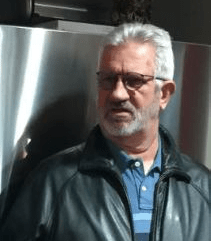
Bill Cushing has lived in Virginia, New York, Pennsylvania, Missouri, Florida, Maryland, the Virgin Islands, and Puerto Rico before moving to California. As an undergrad, he was called the “blue collar” poet by classmates at the University of Central Florida because of his years serving in the Navy and later working as an electrician on oil tankers, naval vessels, and fishing boats before he returned to college at the age of 37. He earned an MFA in writing from Goddard College in Vermont and teaches at East Los Angeles and Mt. San Antonio colleges, residing in Glendale with his wife and their son. Bill has been published in various venues, including Birders World and The San Juan Star. His short stories have appeared in Borfski Press, Newtown Literary Journal, and Sediments. His poetry has appeared in numerous journals, including The Avocet, Brownstone Review, Mayo Review, Penumbra, Spectrum, and West Trade Review.

 MockingHeart Review