Coming Soon!

MockingHeart friends! Happy Monday.

May your week be fulfilling, relaxing, and just as productive as you hope it to be! I just wanted to leave everyone a note to bring attention to some upcoming MHR doings.

First, remember that on September 1st we open for submissions! Our theme is “liminality,” however you interpret it best in your work–and we can’t wait to see what you send us.

And importantly, MHR will soon feature an interview with the excellent poet and teacher Bill Cushing! In it, Bill discusses his work, his influences, and a certain stellar new book he’s recently welcomed into the world. Stay tuned for this riveting read.

Good luck in all you do, and thanks as always for your attention to and enjoyment of MockingHeart Review!

Cheers,

Tyler Robert Sheldon, Editor-in-Chief


A Happy Occasion!

Congratulations are in order:

Clare L. Martin, MockingHeart Review‘s Founding Editor, just yesterday celebrated her 30th wedding anniversary by hosting a vow renewal ceremony with her husband Dean! Truly an event to remember, and this poet is supremely glad to have attended.

Many thanks, Clare, for all the excellent work you do in the world–and congratulations on this joyous milestone! Here’s to many more ahead.

Tyler Robert Sheldon, Editor-in-Chief

What’s in a Theme?

Quite a lot, actually…all of it fun!

Hi, MockingHeart friends. Happy August! You might know that submissions to our Fall issue open exactly a month from today, and maybe you’ve thought about preparing some work to send our way. We’re excited to view your creations! In this upcoming issue, Fall, we’re introducing our first theme (more about these on our Submit page).

The theme of the Fall issue is Liminality. This can be defined in a few ways, some of which include being “situated at a sensory threshold . . . [or] barely perceptible or capable of eliciting a response,” and dealing with an “intermediate state, phase, or condition” (Merriam-Webster). In a few words: liminality is a between state, or else a doorway.

If you feel your visual or literary work fits this theme, please send it our way in September! If you feel it only fits on a Tuesday night if you squint properly, that’s good too. And even if you’re not quite sure, let us take a look anyway. One beauty of language is that it’s elastic and ever-shifting, and that principle applies to themes and creative work alike.

From all of us at MHR, thank you for the excellent work you do in the world. We look forward to your writing and art, as always!

Tyler Robert Sheldon, Editor-in-Chief

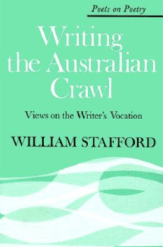
The Rhythm Business: Receptivity, Feeling, Craft, and Perspective in William Stafford’s Writing the Australian Crawl

Screen Shot 2019-07-27 at 12.04.06 PM.png

Editor’s Note: Often on the MockingHeart Review blog we highlight contemporary writers through interviews, book reviews, and other means. It seems important as well to bring attention to writers past, especially those who have left valuable insights we might benefit from studying (which is to say, I suppose, quite a few folks). This review/essay focuses on William Stafford, noted poet and teacher, and the twentieth Consultant in Poetry to the Library of Congress (a title later called U.S. Poet Laureate). His insights on craft and the ways of writing, espoused well in this book, are myriad and worth extensive study.
–Tyler Robert Sheldon, Editor-in-Chief

Known as perhaps the quintessential Kansas poet, William Stafford brought a quiet assurance to his writing that is evidenced in both his poetry and in records of his life as a teacher at Oregon’s Lewis and Clark College. Perhaps more importantly, though, in his writing habits and the advice he gave to his fellow writers, Stafford espoused a solid sense for what poetry is capable of. In his craft book Writing the Australian Crawl, Stafford offers his view on writing and on the business of being a writer. He utilizes and advocates a powerful but understated tone, and also evinces meticulousness where poetic structure is concerned. In his study of how and why writers pursue their craft, Stafford offers his own credo as a possible way of looking at the literary world and the world at large: “a writer isn’t simply a craftsman with something to say and the skills to say it. Rather, a writer brings those attributes into a process that is filled with exciting emergencies and opportunities” (from the back cover). Crucial to Stafford’s perception of writing is the notion that his ideas are one way of looking at the world, not the only way. This open-mindedness informs Writing the Australian Crawl and allows for immersive, easily retained reading.

One of the most striking tenets that Stafford sets forth in Crawl—and one that seems highly important on the whole—is his idea that receptivity is crucial to creative writing. Here Stafford’s writing habits come into play, as he describes rising at four in the morning to make coffee and toast, and then laying down on the sofa with paper and pen to begin his daily writing (Stafford 17-19). In his memoir and biography Early Morning: Remembering My Father, William Stafford, Stafford’s son Kim (himself a noted poet and essayist) makes note of this ritual as well, emphasizing the fact that such early mornings resulted in hundreds of poem drafts and notes about goings-on (Early Morning 5). Being willing to write whatever idea comes into one’s head, Stafford notes, is key to getting actual words on the page. Those words can be edited later, but most important of all is that first generative act.

This receptivity, Stafford asserts, works in tandem with a necessary willingness to fail. Perhaps the Kansas-born poet’s most famous axiom is advice to writers who run into creative stumbling blocks. While this saying is often paraphrased as “lower your standards and keep writing,” Stafford points out that these “‘standards’ . . . do not mean ‘correctness’—spelling, punctuation, and so on. These details become mechanical for anyone who writes for a while.” Instead, the poet emphasizes the importance of holistic discovery rather than a focus on minutiae at the expense of message. These latter foci, Stafford notes, are distractions that “may harm the creating.” His view here is simple on its face: focus on generating writing, no matter the subject, will allow for more writing to occur. For a poet known to have produced some 20,000 poems in his lifetime, that advice seems sound: “[r]eceptive, careless of failure, I spin out things on the page. And a wonderful freedom comes. If something occurs to me, it is all right to accept it” (Stafford 18).

In addition to receptivity, Stafford also champions instinct and “feeling” when writing—what he calls “composing in language.” His emphasis on composing by feel seems like a wholly honest approach to writing: rather than relying on stoic (and perhaps tired) conventions, the poet may benefit the most from experimenting with what feels best. Composing, in other words, by intuition and accrued poetic sensibility rather than by stringent rules. Stafford asserts that rhythm of speech will influence placement and arrangement: “how the words go on the page” (53). To that end, he seems to argue, the sonic qualities of poetry can be tied very strongly to the visual properties of word arrangement, and of words’ interaction with the white space of the page. Symmetry and asymmetry are important in influencing that word placement, but Stafford’s assertion that such placement should feel “right” allows for individualized expression that defies formula: “fresh” poetry. In his characteristic plain-spoken style, Stafford summarizes this idea efficiently: “[o]ne who composes in language confronts opportunity too varied for fixed rules” (55).

Furthering his assertion that fixed rules are not the only tenets of “good” writing, in Writing the Australian Crawl Stafford approaches diction, and the words that compose it, with a light but decisive hand. In the included essay “Some Arguments Against Good Diction,” he upends what he thinks of as the traditional “writerly” image: one who has, quite literally, words within physical arm’s reach. Stafford poses it thus: “Apparently for many people the writer is conceived as a person sitting at a big desk with cubby-holes containing all the words there are . . . a novice learns an adequate vocabulary, sits down at his desk with all the cubbyholes, and is a writer” (57). As Stafford argues, the overarching implication here is that diction and vocabulary alone can craft a good writer.

He counters this idea by illustrating his own experience when writing—he feels compelled to do so, and the words he uses do not sit sedate in a filing cabinet. Rather, they jump out at Stafford, clamoring to be recorded: “Where words come from, into consciousness, baffles me. Speaking or writing, the words bounce instantaneously into their context . . . They do not wait for my selection; they volunteer” (57). Putting this idea of writing as intuition or compulsion into a more universal context (and carrying on that concept of writing what feels correct), Stafford notes that for writing to be powerful, it is helpful to wait for language’s arrival when it deems the moment to be correct: “let the language itself begin to shape the event by its means. If . . . we happen upon a word with a syllable that reverberates with many other syllables in contexts that reinforce what the immediate word is doing, we have ‘powerful language’” (59). Once again, in other words, writing through feeling can often be an efficient way to good writing. This approach shrugs off typical strictures associated with diction, allowing for poetry to occur more organically than it might if constrained by form or other limitations.

In addition to these technical and theoretical perspectives on what makes for efficient writing, Stafford importantly asserts that poetry comes not just from academic study but also from drawing on life experience. In fact, he argues, one’s draw toward poetry may stem first from one’s interactions outside school, college, or academia at large. In the essay “Whose Tradition?” Stafford points out that “[older students] read and write a language that grows from daily experience rather than literary experience . . . It is now true that the universe from which we speak is the universe of immediacy, the realm of conversation. Poems are intervals of freedom and excitement in the language that even the youngest and the most ‘uneducated’ flourish in” (77). Here, Stafford refuses the commonly held idea that only older, more educated people can properly appreciate poetry, a revelatory insight for those accustomed to the “ivory tower” perception that frequently shrouds poetry in a layer of academic mystique.

The latter section of Writing the Australian Crawl is comprised of interview transcripts and Stafford’s conversations with other writers. In an interview with Cynthia Lofsness, Stafford notes that while he reads some contemporary poetry, he dabbles more than immerses himself into it: when he does read contemporary poetry, “it’s sort of like nibbling olives or something” (85). Going further, Stafford implies that he trusts his own voice and enjoys those of other writers, but wishes to stay individual in style—and he also notes that his individualism even extends back to his first days of writing poetry. When Lofsness asks him when he realized he wanted to be a poet, Stafford replies, “My question is ‘when did other people give up the idea of being a poet?’” (86). He also confirms once again that when he works at his writing, he is “really working by means of those things that are closest to him, his sustained immediate feelings” (87).

In a revealing moment, Stafford also later lends insight to the criticism of poetry. Poetry critics, he notes, tend to be very hard edged at times, but when poets themselves are the critics, they might go the opposite route: “most of them [are] too careful, too benevolent.” He clarifies that statement quickly, adding, “I don’t mean that they ought to be mean to each other, but we have to learn to accept the person’s acceptance and rejection.” This tempered approach, Stafford suggests, creates a balance between two extremes: overt harshness and sycophantism, with the latter being no doubt just as harmful as solely negative words. He also acknowledges, though, that poets often have the hardest time critiquing each other’s work, as they (foremost among critics, it seems) veer hard to those extremes. As Stafford puts it, “A critic ought to be at least as mean as a poet. And most poets, when they turn critic, either turn entirely mean . . . or they get too soft” (109). Clearly, finding that balance can be quite a difficult task.

Regardless of that happy medium, though, for poets the question can be far more elemental—an almost existential concern with how long they will be able to keep writing, how long inspiration will continue to flow from their fingertips to the page. In an interview with Stafford toward the end of Writing the Australian Crawl, Sanford Pinsker references W.H. Auden and Theodore Roethke, pointing out that “when they finish a poem that they know is really good, the satisfaction quickly fades into [that] anxious question: ‘Maybe this is the last time?’” When Sanford directs this question at Stafford, he demurs, arguing that he feels he will always find a way and a reason to write: “Will we think of something else? Sure we will. We always do. I do not at all have that feeling. . . . All these things are expendable and the more expendable you keep feeling these [writing] things are, the more likely you are to have things happen to you” (116).

This confidence in writing’s constancy is one of the most assuring parts of Writing the Australian Crawl; it reaffirms that inspiration never really leaves us. Stafford takes the notion further when he states that he doesn’t believe in writer’s block: “I can imagine a person beginning to feel that he’s not able to write up to that standard the world has set for him. . . . The only standard I can rationally have is the standard I’m meeting right now. Of course I can write. Anybody can write” (116-117). This open-minded stance spurred Stafford on to write some 20,000 poems over the course of his lifetime, and it is one of this volume’s most inspiring moments.  For these reasons and still others, Writing the Australian Crawl is an excellent book for beginning and experienced writers like, so that we may hone our craft and approach each new piece and early morning of writing with the feeling and perspective necessary to make it a success. With Stafford’s guidance in mind, these tasks will not be so very difficult to accomplish.


Works Cited

Stafford, Kim. Early Morning: Remembering My Father, William Stafford. Saint Paul: Graywolf, 2002.

Stafford, William. Writing the Australian Crawl. Ann Arbor: Michigan UP, 1978.


Tyler Robert Sheldon is Editor-in-Chief of MockingHeart Review. His five poetry collections include Driving Together (Meadowlark Books, 2018) and Consolation Prize (Finishing Line Press, 2018). His poetry, fiction, artwork, and criticism have appeared in The Los Angeles Review, Pleiades, The Tulane Review, The Dead Mule School of Southern Literature, Tinderbox Poetry Journal, and other venues. A Pushcart Prize nominee and recipient of the Charles E. Walton Essay Award, he earned his MFA at McNeese State University. View his work at TylerRobertSheldon.com.


Our Spring/Summer issue is HERE!

Happy July, everyone!

Our new Spring/Summer issue is now live! This is our first issue under new editorship, and also the first issue to include both poetry and artwork–a feature that will continue in future.

Take a look at Volume 4, Issue 2 here, and please spread the word! Share the issue on social media, write it down on a paper airplane and give it your best throw. Tell your friends, and (if you feel like it) unsuspecting folks you run into while out and about! The Arts thrive when lots of people appreciate them, and you can help them along by mentioning MHR.

If you submitted to this issue, thank you so much for trusting MockingHeart Review with your work. We mean that from the bottom of our hearts. If you have yet to submit, know that we can’t wait to meet you! Submissions to our Fall issue open on September 1, and we’ll leave the light on. If you’re a first-time contributor in this issue–welcome to the MockingHeart family. We’re glad to know you. And if you’re in this issue and have been in an MHR issue before, welcome back.

Enjoy! The journey continues here.

–Tyler Robert Sheldon, Editor-in-Chief

Submissions Open May 1st!

Just a note to our readers, contributors, and future submitters–MockingHeart Review opens for submissions on May 1st–only six days away! Now’s the time to polish up that poem or art piece you’ve been working on–we’ll be happy to look at it! You can take a look at our submission guidelines here.

Thank you all for helping MHR succeed! It wouldn’t be the journal it is today without your excellent work. Looking forward to another great issue!

Cheers,

Tyler Robert Sheldon, Editor-in-Chief

Poet to Poet: Candelin Wahl and Lisa Ludden

Dear Candelin,

I just read your poem “Attending Murmurations Dance or Precarity,” and I thought it was beautiful. I was really interested in how each stanza worked like a sentence, like a complete thought, using the stanza and line breaks as punctuation really.

I was particularly drawn to the opening stanza: “how seamless the dancers lean in, float apart/their near collisions fluid as starlings/and swallows that swoop their way/to evening roost”.

Perhaps we should talk a little bit about what interests us in writing, or what we’re working on, or what we’re concerned with in poetics?

I look forward to talking with you.

Lisa


Hi Lisa,

Thanks for reaching out – and for your careful reading of my poem. I’m looking forward to sharing my own responses to your poems, as well as exchanging ideas and process notes

I have a daily journal practice that I’ve been keeping since 2012, and it’s been a godsend for helping me name and follow my creative priorities. I was converted to “The Artist’s Way” by Julia Cameron six years ago and credit her insights for restarting my writing practice.

Best Regards,

Candelin


Dear Candelin,

Ah…daily writing practice. Well, I try. For the past two years, I’ve been working pretty diligently on a poetry manuscript, so, in collecting, writing, and rewriting those poems, I did write almost every day. I think because I had a project in hand, and I had given myself a timeline (to finish the book this summer, and begin submitting it in the fall), I had to write daily. I began working with an editor in January, and once I got the manuscript back, I went through it page by page. I would try to tackle one poem a day. And for the most part, I kept to that schedule, although when I got to poems that needed a complete overhaul, or if I was writing a new poem to address a gap in the book, then those poems would generally take longer. This type of intense revision was new to me, but I found it incredibly useful. I really started to recognize my patterns in writing, the forms I was drawn to (couplets, prose poems), and the types of syntax inversions and line breaks that interest me. I also learned a lot about the stages that my poems go through. For the most part, my poems go through multiple drafts.

Take care and talk soon,

Lisa

Hi Lisa,

I’ve just read your three poems again from MockingHeart Review. I was so struck by the emotional tone, and how the three poems held together as a set. I often have trouble expressing a larger “idea” that comes out of a scene or event in my life. But each of these pieces succeeds at just that. What I notice is how you vary your poetic form to match the mood and rhythm of each poem’s language. Maybe we can dialog a bit about form – how we make the decisions for each poem?

Here are a few of my impressions:

“Tread Water, Please” is so immediate and specific, with many layers of meaning in the conceit of swimming, treading water, and breath. My favorite line is “I don’t feel fit for permanent space.”

“Holding Pattern” spoke to me most strongly. A spare scene in just the first line, followed by a lyrical yet straight-forward lament: “I don’t want to be available.” Judicious use of italics helps readers track the heaviness in your heart. The last line is restorative without being perky or off-handed: “But the regeneration comes in fits and starts if you let it.”

I admire “Gathering” for its brave prose form and haunting language. “…the molten thought becomes something heated, something cooled, something burning and there is nothing holding me to the earth but the salt,…” As someone who grew up on Long Island Sound in Connecticut, I relate to the power of salt water and the healing from swimming in it.

You asked about Burlington Writer’s Workshop (BWW) and its literary journal Mud Season Review. Please check out their website.  I started coming to the weekly BWW workshops in early 2015 and found my creative home and support community. I committed to myself that I would submit once a month, which really helped me write more regularly. I had recently left a corporate marketing career in favor of part-time freelance writing (mostly web content for corporate clients). I had been a blocked creative writer for most of my adult life, so this was a heady, liberating time. I wrote some memoir pieces, a short story or two, part of a children’s musical play, and wrote lyrics to about twenty songs. This was how I discovered that my passion is poetry, and I’ve been immersing myself in that genre for about two years. I’ve attended three all-day Poetry retreats and several workshops led by guest writers, including Baron Wormser, former Poet Laureate of Maine and a gifted instructor.

Last summer, I was accepted as the Mud Season Review Poetry Co-Editor, a volunteer position. This 5-15 hour a week position has been extremely rewarding and has really jump-started my own writing. I’ve been inspired to submit my work widely, and I’ve had a handful of poems published online. Recently I was thrilled when Stone Coast Review in Maine accepted one of my pieces for their Summer 2018 print issue. I’m following the advice of Julia Cameron in “The Artist’s Way,” journaling every day for the past six years, and enjoying the process and journey of my artistic recovery. I tend to lapse on the weekly “Artist Date,” but when I do them, there’s almost always a creative reward in the form of a new poem or song.

Thanks,

Candelin


Dear Candelin,

Congratulations on your publication in StoneCoast Review. It’s a great journal.

And thank you for the kind words about my poems. I’m so excited that you homed in on the rhythm and form because that is something I think about quite a bit, especially when focusing on the line itself, as an entity.

A few thoughts about how I make decisions about forms in poems:

I tend to work a lot with prose poems and poems in long lines. One of the draws of the prose poem is how it can really dictate the rhythm of the poem, like the lines are running over the edge, and the reader is forced to keep up. Sometimes this causes a problem in my work, so I find I must be really specific with punctuation, otherwise, it can be difficult to follow the logic of the poem.

This past year, however, I have found myself writing more in couplets. A few months ago, I was working with a small series of prose poems that weren’t quite working, so I tried writing one of them in couplets. After sharing those versions with a friend, she suggested that I rework all of them in couplets. What I find compelling about the couplet is the placement of the line break, what that does to expand the possibilities of meaning in the poem, as well as to propel the poem forward (which is what I like about the prose poem).

How I make craft decisions really depends on the content unless I’m responding to a prompt that dictates a form. I struggle with adhering to strict forms in my writing, so I’ve also been trying to write in form, with constraints, to challenge myself. I’ll usually pick one formal element, to begin with. I worked with the ghazal form with a poem that was in couplets already, and that I wanted to incorporate repetition into, but I didn’t want it to be a poem about repetition. In the end, I took great liberties with the form and used the repeating word in within alternate lines.

Some of my questions for you: How do you determine form for your poems? What is that process like for you? What are you currently working on now, and what formal shape is it taking/or not?

Talk soon,


Lisa


Hi Lisa,

Your comments inspire me to experiment with a wider variety of forms – thank you! So far, my writing process has been to start out drafting stanzas in free verse. Once I get the language close to what I’m trying to say, I go back and see if there’s another form that could support the lines better. I’m also drawn to couplets – they provide nice breathing room between images and lines, allowing readers to consume a poem in smaller, hopefully, memorable bites. Other forms I admire, which I’ve only dabbled with, and haven’t come close to mastering. But I’m not giving up: prose poems found poems and centos. Mud Season Review recently published a striking portfolio of the latter two forms by a poet named E. Kristen Anderson – lines taken from Anne Rice novels and other popular writers.

A few of my own poems cried out for a more chaotic look and layout. I can’t say I’m at ease with this type of rule-breaking (though all gratitude to e.e. cummings). But it’s fun for me to go a little wild with shape and punctuation or lack thereof. It’s been many years since I studied poetry, so I’m taking it slow as I rebuild my vocabulary and study of the craft.

What I’m working on now: I bounce between writing song lyrics and poetry. I’ve tried to focus on poetry for the last two years. But lately, I’ve been drafting songs and scenes for a musical play. I’m hoping to work with a composer/collaborator. So, any new poems are in the seedling stage. I do have a long-form poem simmering. It will be after a seven-page poem I’ve always loved by Julia Alvarez called “Making Our Beds.” To help keep that moving along, I’m jotting, jotting, jotting: impressions, images, snippets of conversations I hear – the material goes into my phone as a voice memo or into my notebook. I’m on the wait-list for a residency in October, and this poem will be my project. Whether or not I’m accepted at the residency, I’ve blocked out those two weeks for writing. If not, I’ll fashion a DIY retreat of my own, which I’ve done before. I’m thinking of a friend’s (heated) vacation house on Cape Cod…

One fun thing I’ve done this past year is participating in open mic poetry readings. This was at the encouragement of a wonderful guest poet named Partridge Boswell. He led a series of three workshops on “Revision,” which culminated with eleven of us reading at the Monday night “Lit Club at the Lamp Shop”, a local poetry open mic. His belief is that poems are always in some stage of revision and reading poems in public is a great way to “take them out for a test drive.” Since then I’ve read several times and have become much more relaxed about sharing and revising my work. Quite liberating!

So, I’ve introduced another two new topics you might share about: Your thoughts/experiences on participating in public readings & your approach to revisions.

Cheers,

Candelin


Dear Candelin,

Thank you for sharing “Trashed” with me. The poem uses the space well. Particularly the space in the line


“Which neighbor takes toast ………… with pure Irish butter?”

I know how long to pause here. The whole poem does that, really instructs the pace. Although, with that said, I’d be interested to hear you read it. Perhaps the pace I move at as a reader doesn’t wholly match yours. I think about that often, especially with poems that move across the page in non-traditional ways. I’m not worried about the reader not reading the poem as I would, but more curious about how the reader is reading the poem.

I’ve been working on trying to participate in more public readings over the last few years. It’s funny, I stand up in front of students all day long and at relative ease, but it’s very different standing up and sharing poems. I’m trying to get over that and have found that I’m starting to enjoy reading my work in public more and more. I think the idea “that poems are always in some stage of revision” is true, and I like the idea of the reading being a “test drive.” It puts a little less pressure on the outcome. Thank you for sharing that.

My approach to revision…well, when I draft, it’s usually messy pages of notes on a legal pad that I eventually come back to. Then, I will rewrite by hand or type the draft (more often I rewrite first), and work with the poem for a bit. Then usually it sits while I think about what the poem is after. That’s when I go back and really dig into the draft, both in terms of craft and content. The short answer, I suppose, is that my poems sit in the draft stage for a long time. I’m always envious of writers who are willing and able to share their newly penned poems at workshops, where the words and images seem instantly connected. I find that I have to dig more for words. The idea roots in my mind long before I find the page, however, since having children, I have more difficulty holding onto lines in my head, so once they’re there, I must write them down immediately.

…Yes, I would love to keep in touch. I second your comment about how nice it is to talk to another writer.

Lisa


###
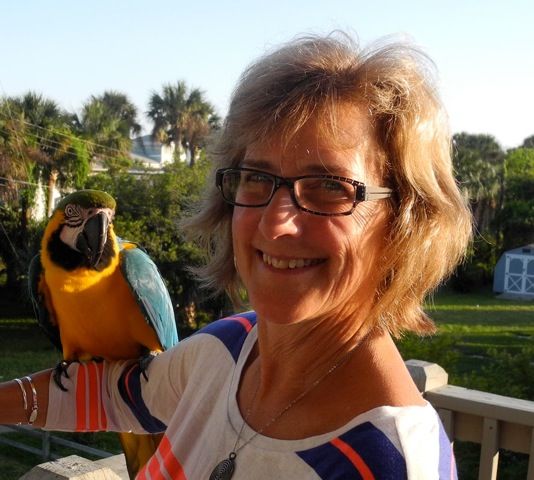
 

cwahl-headshot

Candelin Wahl is an emerging Vermont poet who explores relationships in all their tangled forms. She is Co-Editor of Mud Season Review. Her work has been published or is forthcoming in the 2017 Best of the Burlington Writer’s WorkshopHerStory and Red Wolf Journal.


lisa ludden

Lisa Ludden lives, writes, and teaches in Northern California. She is the author of the chapbook Palebound (Flutter Press). Her poems appear in Natural Bridge, the Plath Poetry Project, LUMINA Online, and elsewhere. She is currently at work on her first full-length book of poems.

New Issue and Exciting News!

Our new issue is LIVE. We couldn’t be happier with the work in it. Beautiful, engaging, and moving verse. Thank you to the poets who have entrusted us with your work. To our beloved readers: Enjoy! And, of course, thank you.
 
With the publication of Volume 4, Issue 1, I say thank you to all of our contributors who have made this work such a joy over the almost four years of this endeavor. It is with joy that I announce the appointment of Tyler Robert Sheldon as Editor in Chief of MockingHeart Review. Tyler has the vision, energy, integrity, and poetic sense that promises an exciting future for poets and readers. I couldn’t be more enthusiastic about the decision to place the leadership position in his hands.
 
MHR will take a bit of a rest as we undertake the transition process. Expect to hear from us through our blog, Beats, and again in May when Tyler sets forth on this rewarding, enlightening, and fun-filled adventure.
 
I am so very grateful for the support of so many and for the opportunity to help bring poems I love to the world. Please enjoy our new issue and share it with your friends, families, and colleagues.
 

Clare L. Martin, Founding Editor, MockingHeart Review

The Virginia Project

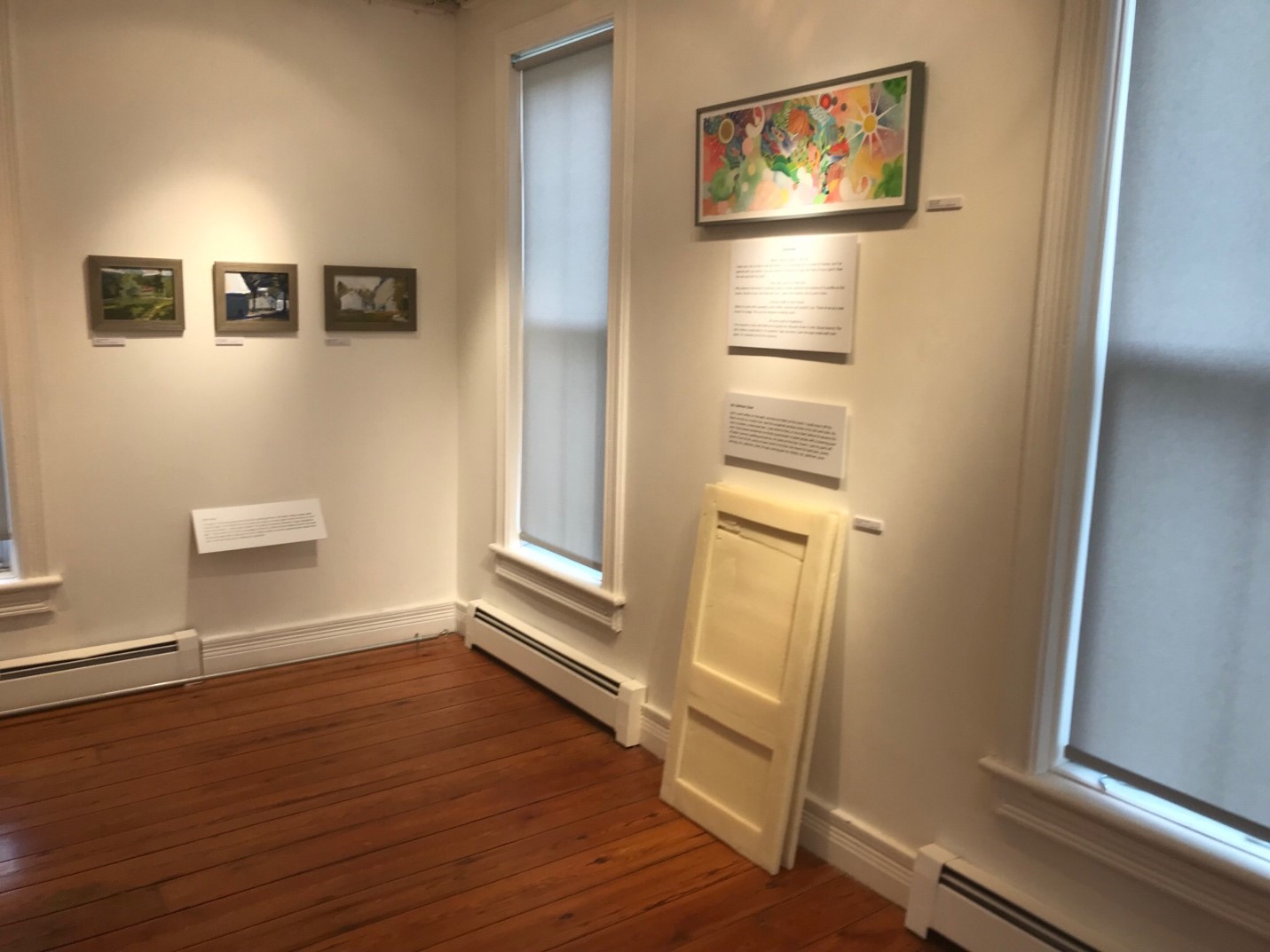
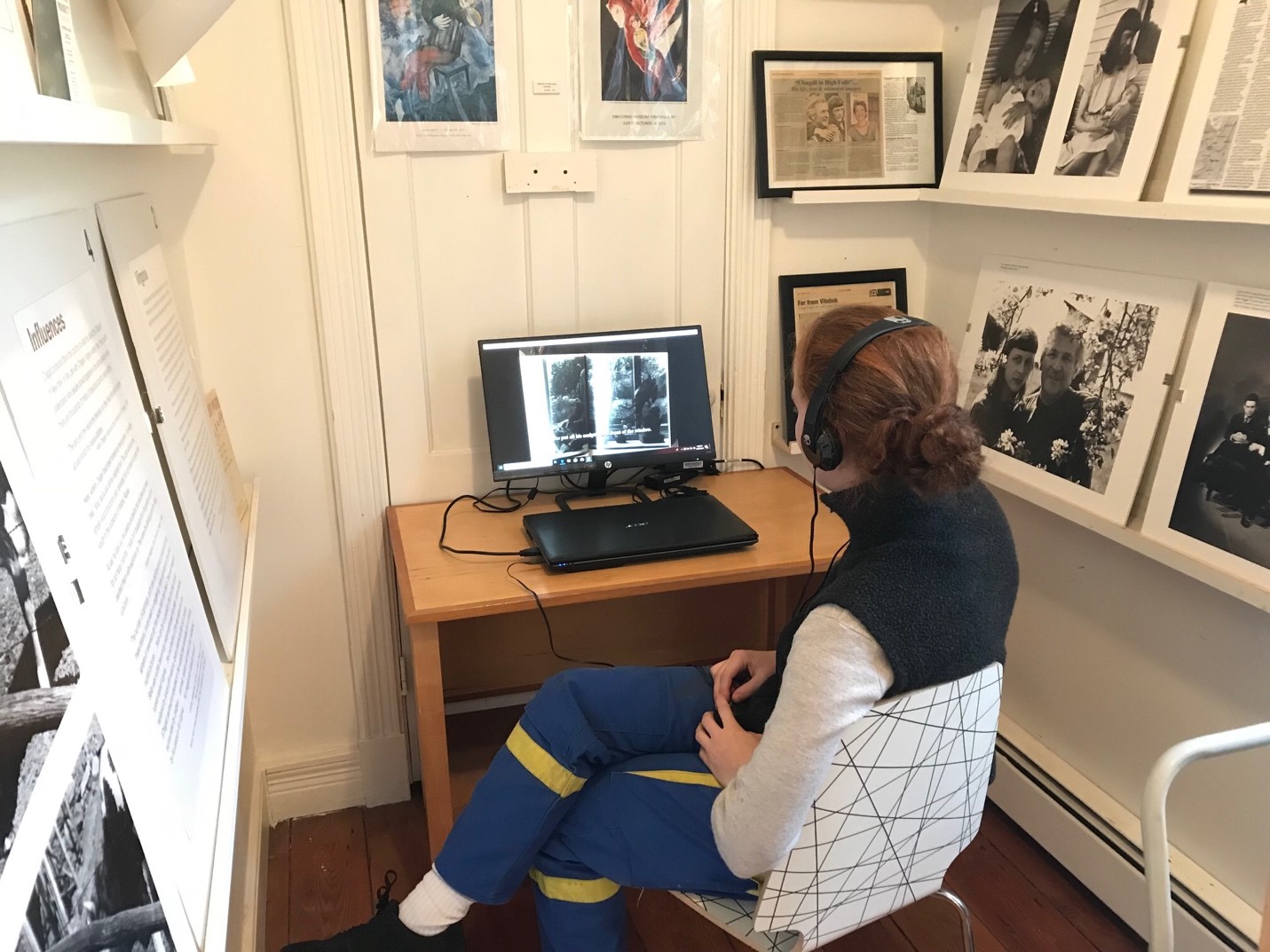
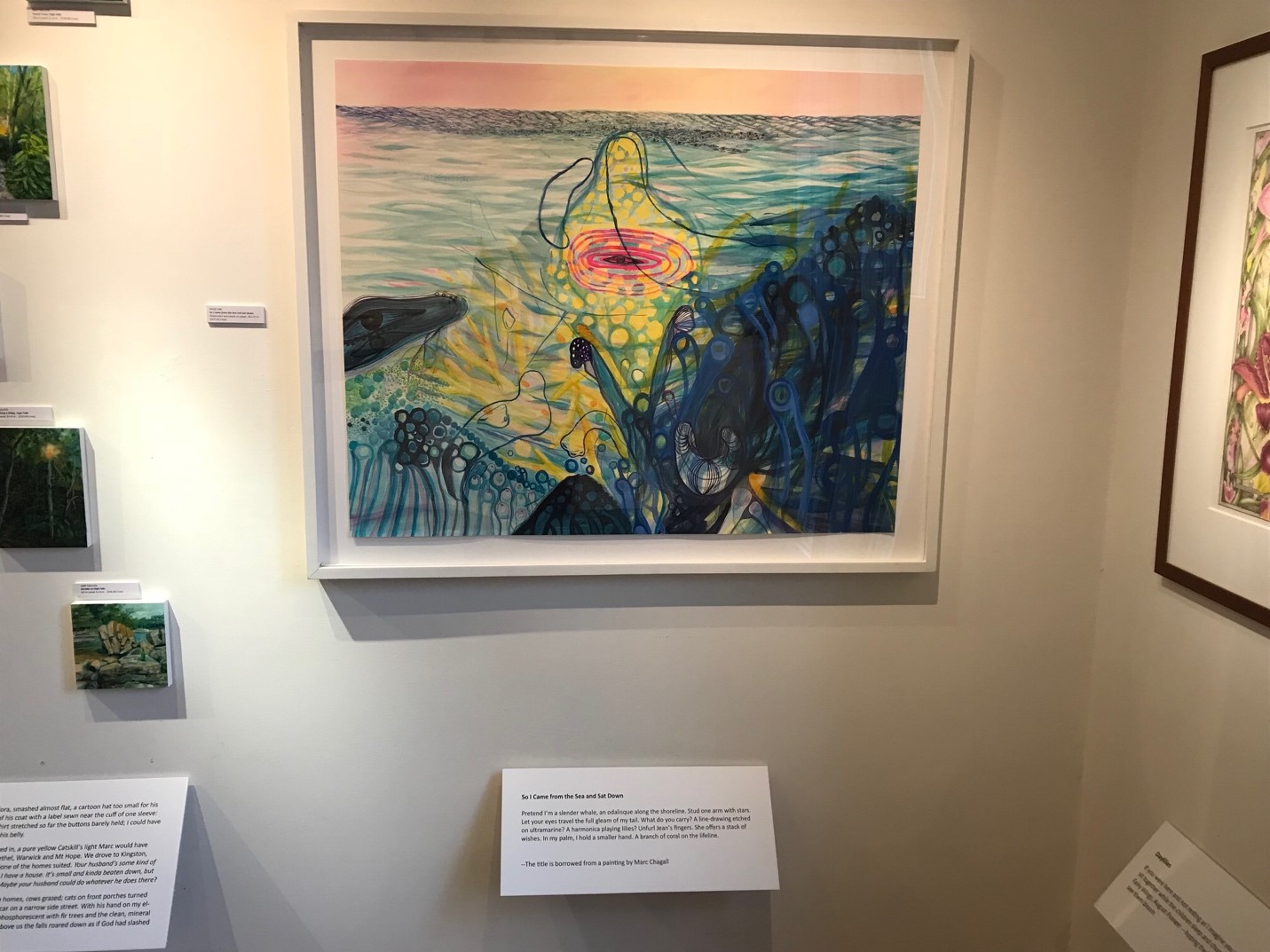
Poet and writer Tina Barry recently curated a collaborative art and written word show titled “The Virginia Project” that held its debut in High Falls, New York. The project centers around Marc Chagall’s partner, Virginia Haggard, and their daughter, Jean McNeil, who lived in High Falls for two years. Tina discovered they had lived within blocks of her home when she moved to High Falls herself in 2015. Intrigued, she began researching the story of how they came to live there and the relationships between Chagall, Haggard, and McNeil.  What Tina learned inspired her original poetry and, subsequently, to collaborate with visual artists to create The Virginia Project. Artists who participated include Leslie Bender, Barbara Danin, Jenny Lee Fowler, Jaime Caul, Trish Classe Cianakis, Wendy Hollender, Heige Kim, Ingrid Keppler Lisowski, Kate McGloughlin, Giselle Potter, Adie Russell, Amy Talluto, Anique Sara Taylor, and Lori van Houten. The exhibit debuted at The Wired Gallery in High Falls October 27, 2018, and will open at the galleries in Long Island University the week of January 21, 2019.

MHR’s Charlotte Hamrick recently spoke to Tina about the project.

***

How did you discover the story of Chagall and Haggard in High Falls?


In 2014, when my husband and I bought a house in the hamlet of High Falls, NY, I started doing some research about the town and learned that Marc Chagall had lived there from 1946-1948. There was a lot of information about Chagall, but very little about his partner Virginia Haggard, and Haggard’s five-year-old daughter Jean McNeil. I did some digging and found that Haggard, who was 30 years younger than Chagall, was much more than the “maid” or “mistress” she was often referred to in writing about the couple.


Haggard, the daughter of an English diplomat, was an unconventional, outspoken woman, who was passionate about art. She was well-educated, spoke several languages, and was an aspiring artist. She married a man her parents despised, and wouldn’t take their financial assistance when her husband’s mental health declined.

She went to work for Chagall as a housekeeper to bring in some money. She was never his mistress. Chagall’s wife died shortly before he met Haggard. I wanted to give Haggard and McNeil voices in their history with Chagall, so the women tell their stories. I now have 60 poems and prose poems, flash and letters. 15 of the pieces appeared in The Virginia Project.

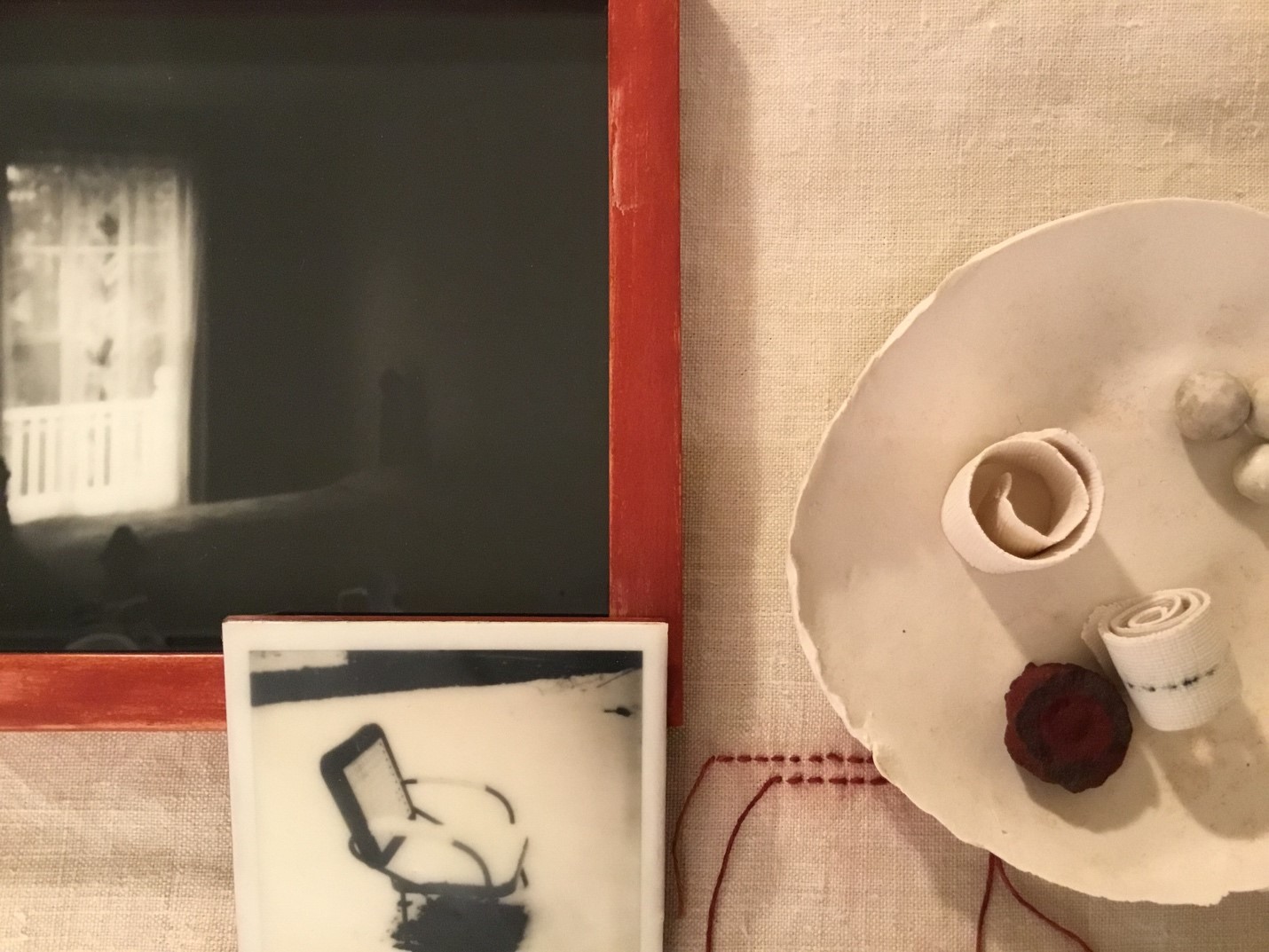
Detail of Lori van Houten’s piece, “White Flannel” white flannel


 Was it difficult to find information about Virginia and her accomplishments?


Haggard is sometimes mentioned in articles and books about Chagall; in some accounts, she’s left out completely. Journalists and historians seem to have had little interest in Haggard, besides looking pretty in photos, and that she was the mother of Chagall’s only son David.


As I researched, I discovered Haggard’s memoir My Life With Chagall: Seven Years of Plenty With the Master as Told by the Woman Who Shared Them. I use a few of the anecdotes and characters as jumping off points, but my work in this series is fiction; most of the writing is imagined.

1


2


Why did you decide to focus your poetry on the mother-daughter relationship instead of Chagall and Haggards?


Well, the mother-daughter relationship is important to the story. As a child, Jean McNeil had no agency. She watched her father’s mental health decline, was witness to the budding love affair between Chagall and Haggard, and then folded into this new family unit. It was a tough, unsettling time for McNeil, and Chagall was focused on Haggard, not this sensitive child who didn’t have a say in what came next. But, the writing in the series is as much about the adults’ relationship as it is about the mother and daughter.


3


How many artists participated and what are some of the mediums they used?


Finding, meeting and collaborating with the artists was one of the great joys of the project. I chose 14 women artists whose work resonated with me. For The Virginia Project, each of the artists interpreted a different piece of writing. I wanted a mix of styles and mediums, so my words and Haggard’s and McNeil’s lives were looked at and expressed from different angles. A few of the artists work conceptually. Two are illustrators. I have two artists who create cut-paper pieces. A few landscape painters. The artists use paint, clay, wasp nests, fabric, paper, oils and acrylics, photos. I had an idea of what their interpretations would look like, yet I was surprised again and again by what they created. It’s been exhilarating.

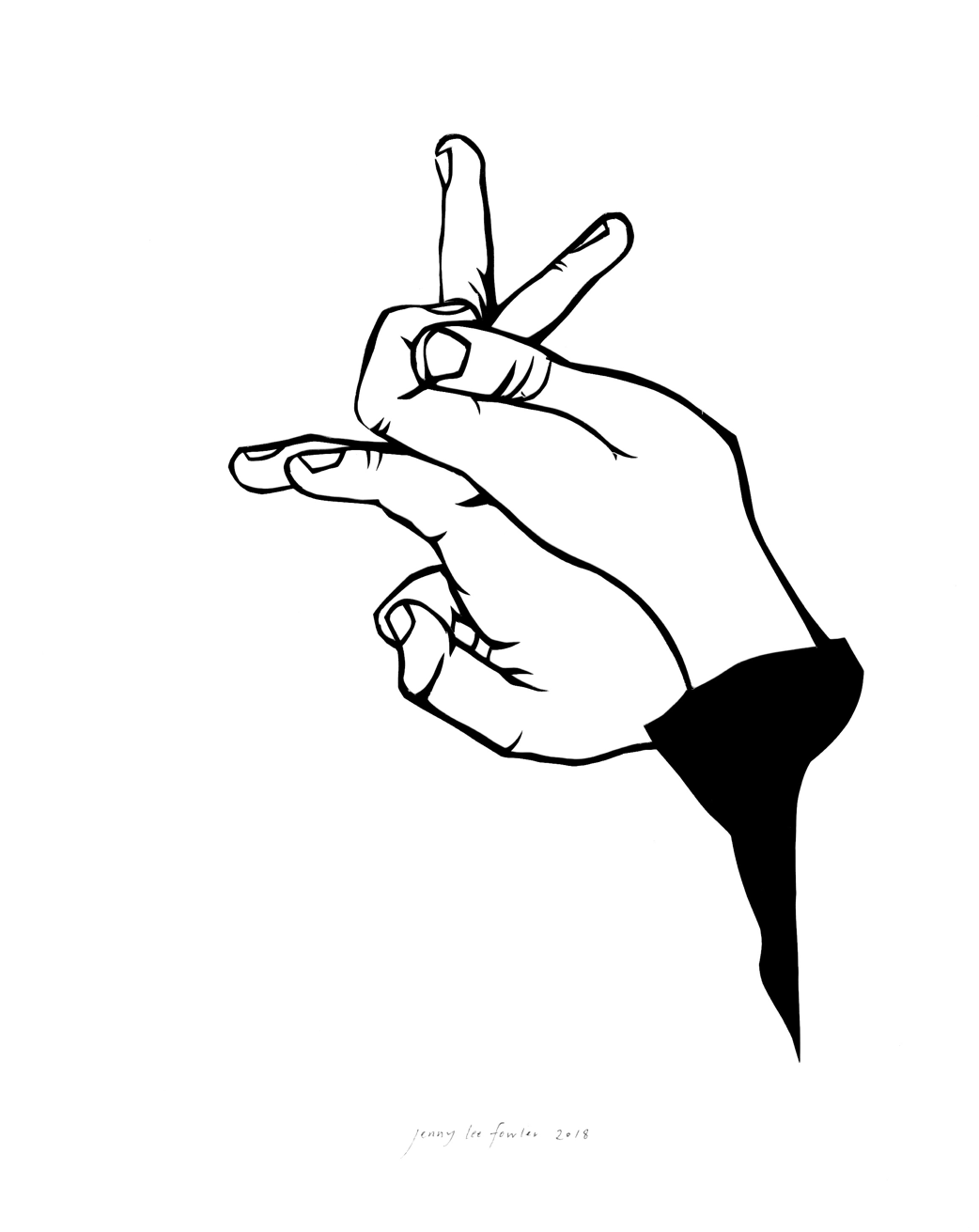
Tina graciously provided an example of her poetry and the corresponding cut-paper artwork by Jenny Lee Fowler, below.

1a hand image


Shadow Pictures

Dad used to hold his hands up and make shadow pictures on the wall   He did a rabbit and a dog   Now he only holds his hands up so we don’t see him crying   Dad sits on his chair and rocks like it is a rocking chair but it is not a rocking chair   It goes skritch  skritch   skritch  skritch  Dad is a baby now   Sometimes I ask him  Will you take me to the park  No sound comes out but his lips move like mine did when he was teaching me words   Dad would point and say tree  Then I would say tree  Then he would point and say squirrel   Then I would say squirrel


tina barry
Tina Barry

Tina Barry is a former artist and textile designer. Her writing has appeared in several anthologies including The Best Short Fiction 2016 (Queens Ferry Press), Nasty Women Poets: An Unapologetic Anthology of Subversive Verse (Lost Horse Press, 2018), and Feckless Cunt: A Feminist Anthology (World Split Open Press, 2018). Her poetry and short fiction can be found in numerous literary magazines including Drunken Boat, Connotation Press, and Blue Fifth Notebook. Tina has two Pushcart Prize nominations and several Best of the Net nods. Tina is the author of Mall Flower: Poems and Short Fiction (Big Table Publishing, 2016). She is a teaching artist at The Poetry Barn and Gemini Ink. The Virginia Project is her first effort at curating and her first collaboration.

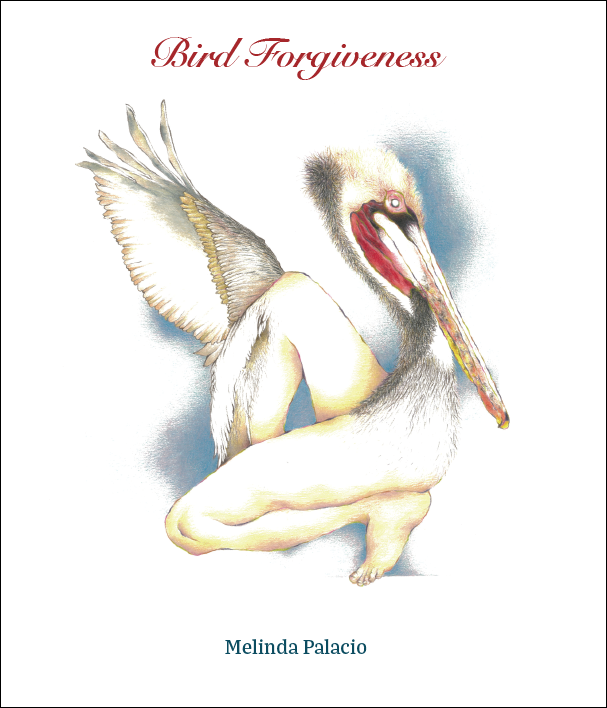
Then Freedom: Melinda Palacio’s “Bird Forgiveness”

bird forgiveness

Then Freedom: Melinda Palacio’s Bird Forgiveness

3: A Taos Press, 2018

Reviewed by Tyler Robert Sheldon


Melinda Palacio’s new work Bird Forgiveness is a testament to living with great care, both personal and global. The collection, which is circular in its structure (opening with a bird and closing with a moment of flight), is certainly deeply personal, but it is also highly ecocritical in its talk of what we are doing to the environment around us—and how we can hope to preserve or even improve it, via our place therein. Palacio’s book opens with a prescient tercet epigraph: “If birds were larger than we are, / how would the world arrange itself, / who would woman this garden?” Here the idea of stewardship is immediately evoked, as is the need for respecting the world as it is, not as we might wish it to be.


In “Caged Bird Cries,” the opening poem, we meet Lola, and this white cockatoo is very much like us in a few notable ways. Though she “lives in a cage that looks like a house with a picket fence,” she is a jealous bird: “admire [the smaller birds’] colors, win Lola’s bird / wrath. She raises hell, her yellow crown, and cries, “Look at me, look at Lola, me, Lola.” This bird speaks in Spanish and in expletives, reminding us that while we are not alone, we should set a good example for other animals that may end up too much like us.

All the same, we are also shaped by a subjective world that we in turn bend to our liking. “Of Cork and Feathers” shows the defenses people put up around themselves: “She named her home the bird house / but kept no birds.” This label is symbolic—a metaphor—as the poem explains. “The motif of cork and feathers meant / more than flying away, flitting from city to city, / taking up residence in warmer climes.” This unnamed character explores the world, maintaining a small space of constancy to return to, to ward against the altering winter outside. This understandable impulse is common for many people and sheds light on our need to preserve a part of the world for ourselves.

Later in the collection, “Year of the Rooster” reveals an irreconcilable difference sprouted from differing cultures. The narrator’s husband’s family enjoys robin soup, something the narrator cannot accept for herself. The poem’s ending lines sum up this difficulty with gracious elegance: “A beautiful jumble of Chinese and Mexican never had a chance / to be, to exist, to refuse a bowl of hot soup, still life with robin.” Here the robin is a microcosm, a metonym for the world: it is not be consumed, but to be nurtured, and to do less is anathema to the narrator’s perspective. Still later, in “Nothing Up Her Sleeves,” a magician’s assistant learns the art of making a canary disappear, eventually getting it right most of the time—and she learns that she doesn’t even need Max, her partner, to make a name for herself. We discover this toward the poem’s end:

When the audience applauds,
she realizes she never needed . . .
his towering shadow; she
leaves his worn size nine shoes
at the last train station.

Even though this poem evinces a different sort of separation for radically different reasons, the root cause is somewhat related to “Rooster” in that, eventually, perhaps we are sometimes too alike in our experiences—mastery through extremes, whether they be culinary or magical. To preserve ourselves within the world, these two poems seem to suggest, we must embrace these without compromise.

Still later in Bird Forgiveness, “Sea of Love Revisited” provides an excellent lens through which to view our world. Toward the poem’s end, the narrator (in the water practicing yoga) is reminded of just how wise our feathered companions truly are: “When angry words prevail because the pitch rings louder / and not truer, I recall the wisdom of birds,” she muses. “I leave a trail of breadcrumbs / for any who dare hear the tremolo of my voice unhinged.” Reciprocating in this way—both thanking the birds for their wisdom, their forgiveness, as well as leading them to her—is a fitting action for a narrator who seems so in harmony with them. As Palacio points out, the world is full of interconnection, and to preserve it and help it grow, we must respect and cherish all who live within it. And when it is time to go, Palacio’s narrator hopes, may it be as lovely and noble as the life that precedes that time. “When She Calls” provides as beautiful an image as could be striven for: “Death bright as lemon meringue pie and quickly gone / into a happy belly is what I wish for you,” she affirms. Life in the world and what comes after, as interconnected as this book’s iridescent poems, are more exquisite than we might dare to hope. In Bird Forgiveness, that life and that world spread their wings to welcome us.

Readers can purchase Bird Forgiveness at one of Palacio’s many readings or from 3: A Taos Press, as well as from regional and national booksellers.


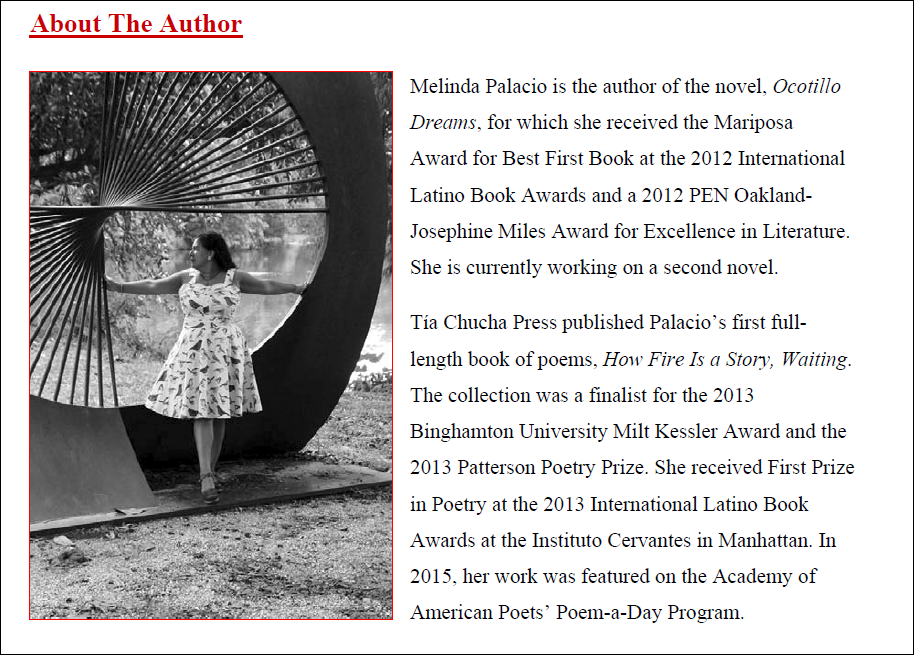
melinda