MHR and Katie Manning on “Tasty Other”

MHR: Many of the poems were sparked by dreams you had. Do you find that writing from dreams liberates your language?

KM: I’m not sure I’d say that it liberates my language, but writing from dreams definitely liberated my form. My tendency is to write in highly structured ways that can feel too tidy, but the shiftiness of dreams forced me to get messy in my writing process.

MHR: Each of the poems resonates the rich aura of pregnancy. Did you find, when writing the book, that the subject of pregnancy could be further explored?

KM: I was really resistant when I started writing pregnancy and baby poems. Fortunately, I realized that I should let myself write rather than fighting against my preoccupation and disruptive physical state. Each pregnancy is so different physically and emotionally, even for the same woman across pregnancies, so I think there will always be more to explore with pregnancy.

MHR: Even the poems that read like fables are grounded in the real world. Do you consider your work in this book “fabulist?”

KM: I have thought of the dream poems as connected to fabulist or speculative writing, and some of the poems do respond to and tweak existing narratives, but then there are many poems in the book that are firmly in the realm of nonfiction.

MHR: You have created a fertile world in which the reader can apprehend the poems even as the poems suggests more mystery beyond the words. Do you think you have succeeded in striking that balance in the open-endedness of the work?

KM: I do feel pretty good about the way this collection seems fairly accessible to non-poets and non-mothers (and I’ve had a couple of men say that reading my poems took them into pregnancy and childbirth in a way they could not otherwise experience). I was hoping to capture the wonder and terror of becoming a mother, and I was hoping to capture some moments of clarity in the midst of the strangeness.

MHR: Many of the poems open chasms of fear that arise from the dangers and “unknowns” of pregnancy.  Did you find that writing these anxieties alleviated some personal fears?

KM: Actually, recording the pregnancy dreams and writing from them made me aware of fears that I hadn’t consciously realized and articulated for myself before. Whether or not writing them alleviated the fears at all, it did at least make me aware of them.

MHR: These poems do not look away. You have some very stark and harrowing images. I commend your bravery. Did you ever think of these poems as charms to ward off misfortunes of pregnancy?

KM: Oh, I hadn’t thought of them as charms, but thank you for seeing that possibility. I was interested in writing about pregnancy and birth in a way that acknowledged the surreal, painful, dark parts and not just the sentimental pastel images that we often associate with baby showers and newborns.

MHR: You use the line “Once upon a time there was a mother” as a device interwoven in the sequencing of the poems.  Do you see these interjections as creating segments, or as places to take a breath?

KM: Originally, those section breaks were a stand-alone poem, first published in PANK as “A Whole Mother Story.” An editor at Sundress Publications suggested that the poem, which takes place entirely in footnotes, might be an interesting organizational device for the book, and I ended up taking that suggestion and using each footnote as a section heading. I think it might be both things that you suggested—those interjected footnotes did create sections of the final manuscript, and they also provide those moments of pause.

MHR: In a couple of poems, we pick up on your time spent in Louisiana. Can you speak to these poems and give us a bit of your impression of Louisiana culture as you experienced it?

KM: I lived in southern Louisiana for three years for graduate school, and I had a wonderful time there. It sometimes felt like we’d gone to another country entirely because the culture is so distinct. We fell in love with the food and the many, many festivals, and I was fascinated by the pervasiveness of Catholicism even in secular realms; when we went to an omelet festival, a priest blessed the giant pan before the cooking began. One of the poems that is especially rooted in Louisiana is “Mother Mary Comes to Be,” a multi-part poem inspired by a life-sized statue of Mary in someone’s front yard down the street from where we lived. In the poem, I explore my fascination with Mary as both virgin and mother (an impossible standard for women, incidentally), and I had a good time imagining Mary at Mardi Gras.

MHR: Thank you for taking the time to answer these questions.

KM: My pleasure! Thank you for asking.


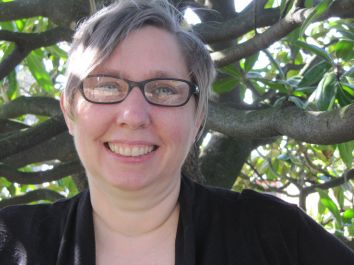
Katie (25)Katie Manning is the founding Editor-in-Chief of Whale Road Review and an Associate Professor of Writing at Point Loma Nazarene University in San Diego. She is the author of four poetry chapbooks, and her first full-length poetry collection, Tasty Other, is the 2016 winner of the Main Street Rag Poetry Book Award. She has received The Nassau Review Author Award for Poetry, and her writing has been published in Fairy Tale Review, New Letters, Poet Lore, So to Speak, Verse Daily, and many other journals and anthologies. Find her online at www.katiemanningpoet.com.

An interview with Catherine Arra

MHR: The unifying theme of the poems in Loving from the Backbone (Flutter Press, 2015) is loving which through the elements of your craft makes loving elemental. Each piece, imbued with passion, or a dispassionate understanding of love and its complexities is finely wrought. In “He Says” I sense the woman’s power is choice. Her choosing to open herself, or not.  Can you speak to the woman’s power as exemplified in this poem?

Catherine Arra: I believe that everyone’s power is in the ability to understand intent, one’s own intent as well as that of others, and to choose accordingly. In “He Says,” we have a relationship that is stalled. The mating dance, courtship teases and coupling are complete. The sex is great. It’s time for the couple to go deeper into relationship or walk away. The woman is aware of her desire or intent to go deeper. She is also aware of her partner’s ambivalence or intent to keep things as they are between them. She knows he loves her, she understands his fear and her power; however, she will not use her power to hurt him but to challenge them both to grow.

In this poem, I wanted to articulate intent by what “he says.”

MHR: In “One of the Girls” you deftly draw an imaginative narrative that likens otherworldliness into a poem that is very much rooted in the world. What was the emotional impetus for this poem?

CA: The emotional impetus for this poem was a growing annoyance with sloppiness or entitled negligence in relationship. The man in the poem needs to clean out his closet literally and figuratively. He doesn’t see the ghosts of his past relationships or how they haunt the present. He is unaware of the irresolution in himself and between himself and past partners. The woman does; she intuits and mediates between past and present. She once again understands intent.

I feel poetry comes from an otherworldliness. The poet hears, discovers and gives voice to the narrative, or often to silence. She traverses and connects worlds seen or unseen, the past and present, the living and the dead.

MHR: “Premature Snow” is a personification of nature. Most of the poems in “Loving from the Backbone” display nature prominently. How does nature inspire you?

CA: Well first, I’ve never been a fan of winter, though the season has taught me how to hibernate, renew and how to have faith. Nature inspires me in all ways; it holds, moves and continually teaches me. I see myself, all mankind, all creatures as a part of one wondrous, divine organism. In nature I find endless metaphor.

MHR: There is a line in the poem “Sustenance” that reads “the recipe for life on earth.” It seems a fitting phrase to encompass the urgings of these poems.  These poems give vital life lessons without being didactic. It’s as though a grace-filled voice whispers to us, “This is the way.” Do you agree or disagree?

I agree, though my intent in writing is never to instruct but to share or show. For me, poetry is a practice like yoga, of breathing and allowing life to move through me, of seeing, appreciating and assimilating what is. The “recipe for life on earth” or “love that lasts” or a poem that works is a delicate combination that may be a form of grace or prayer.

MHR: There is a languidness in the voice of the poems that shines in a quiet contentment, but in a poem like “Blind Passage,” there is a power surge. Can you speak to this?

CA: “…a languidness in the voice that shines in quiet contentment” What a lovely, poetic comment Clare.

I agree that the voice in many of the poems is sated and serene. The “power surge” you sense in “Blind Passage” is perhaps the strength of vulnerability. To love openly, instinctively, without fearful manipulation and intellectual interference is to love from the backbone. I used the quote from D.H. Lawrence to link the poem to Lawrence’s sustained literary message for mankind to stay connected to the natural world, to his instinctual nature and to understand that sex in the head is not sex at all.

MHR: In the title poem, “Loving from the Backbone,” What gave you the imaginative spark to write of the condition of human love related to reptilian life?

CA: The reptilian brain is the oldest part of the human brain. It controls the body’s vital functions: heart rate, breathing, blood pressure, body temperature and balance. Our sense of smell, hunger, thirst and our hard-wired instinct to mate are rooted in the reptilian brain, which is located in the brainstem and the cerebellum providing a direct connection to the spine that governs all movement. For me, loving from the backbone is to love instinctively, organically, in union with emotion and intellect. It is to love fully and consciously from the oldest, deepest parts of our being.

MHR: These poems are sensual and earthy. When you write about the body it is with a deft and careful hand, as though you are creating brushstrokes for a painting. Do you practice any other art forms or exercise other creative skills? If so, how do you see the interconnectedness with your poetry?

CA: I enjoy photography and can say that I practice the art of seeing. I often think visually and have a strong visual memory. I nearly became a professional photographer before I decided to become a teacher. I imagine poems with vivid imagery or an unexpected emotional sweep to be like photographs; I see photographs as poems and stories. I also practice yoga and try to live astutely and fully in and through my body. I believe that the challenging work of the artist is to come through the body, to allow the divine in and through, to give it voice and form in everything we do: writing, painting, cooking, gardening, caregiving, working, living, loving, dying. Perhaps this is the art of being a good vessel.

MHR: I read an article recently that stated that what men, heterosexual men, really want is “safe harbor” in a woman. Would you agree with that in your understanding?

CA: I think we all want safe harbor in relationship no matter our gender or sexual preference. We all want to submit to love and to be loved. Relationship requires courage and tenderness. I play with this idea in the poems, “Submission” and “The Gospel of Skies” wherein it appears that the woman submits to the male sex drive and her partner’s need for safe harbor, but in truth, he submits to her. They go together into the mystery, naked and unashamed. What they create together is safe harbor for both, “where they lie side by side in the gravity of breathing.”

Thank you, Clare, for your deeply intuitive reading of Loving from the Backbone and for taking the time to interview me.


catherine-arra

Catherine Arra is the author of Slamming & Splitting (Red Ochre Press 2014), Loving from the Backbone (Flutter Press 2015) and forthcoming in 2017, Tales of Intrigue & Plumage (FutureCycle Press). Recent poetry and prose have been published in The Timberline Review, Peacock Journal, Flash Frontier, MockingHeart Review and Sugared Water. A former English and writing teacher, Arra now teaches part time and facilitates a local writers’ group in upstate New York. Find her at www.catherinearra.com

An interview with Bill Yarrow

MHR: The title The Vig of Love is taken from the title of a poem within the collection. Can you explain the title as you understand it and as it suggests the other poems?


BY: Vig, from “vigorish,” is the interest on a loanshark’s loan. Love is a debt, a loan you’ll never repay. The poems in this volume are about the different kinds of interest we owe on the impossible loan that is love. P.S. The Muse is also a loanshark.


MHR: In the title poem, the idea of risk is linked with love. Can you illuminate this idea as it pertains to many of the other poems that also delve into the nature of love in this light?


BY: The poem suggests love is a roulette bet. Sometimes we win. Sometimes we lose. But if we really love someone, we need to invest everything we have. We need to “put down all we’re worth.” The debt idea is made explicit in the poem “A Debt No Honest Man Can Pay” which begins the volume. The betting idea is made explicit in the poem “Wanna Bet?” which opens the last section of the book.


MHR: Do you see yourself as a contemporary absurdist? Do you see yourself as a truth seeker with a capital T? Does truth exist? If not, what responsibilities must a 21st century poet fulfill?


BY: I see myself as someone who writes poems. Nothing more.


Yes, specific truth exists, and general truths exist. Does Capital T Truth exist? No. Not for me.


The responsibility of a poet? To write well.


MHR: You have a couple of poems, that use bullet points to present statements of “truth” that are slant and wry.  What principles link these poems? What are their thematic unifiers?


BY: These “poems” (I’m not sure what they really are) consist of aphorisms or admonitions about love, pleasure, desire, passion, addiction, obsession. Read them with Samuel Johnson’s caveat: “In all pointed sentences, some degree of accuracy must be sacrificed to conciseness.” The title “Asbestos Candlestick” references the poem “The Exit Towards Fire.” The title “Sticky, Indifferent” comes from a phrase in “Liz@Phil,” a poem in Blasphemer


before ten years had passed
their loneliness had hardened

into indifferent sticky rapture
and permanent part-time jobs


MHR: As a poet rooted in the human condition, does man have a chance? And if so, does poetry?


BY: If we are human, we are “rooted in the human condition.” Poets are no different from anyone else. Everything has a chance—man, woman, humanity, poetry, goodness, beauty, ugliness, evil…. How much of a chance? That depends on the individual. And on the individual depends the world. As Emerson said, “An institution is the lengthened shadow of one man.” The future is the collective us.


MHR: Do you think your poems speak intimately to the reader or does the speaker hold the reader at a distance to instruct? Do you see yourself as a storyteller or a visionary/oracle?


BY: Every one of my poems intuits a speaker. Every speaker is different. None is me. That is, none is wholly me. My poems all tell stories. I don’t think any sane person ever sees himself or herself as an oracle.


MHR: There is an exacting sharpness in the language, and throughout we are treated to unexpected word collisions. Do you, as a poet, strive to make the unfamiliar familiar in your language?


BY: Thank you, Clare. I love that phrase “word collisions.” That’s an excellent phrase to describe a lot of what I do in my poems. In Pointed Sentences, my first book, there’s a poem called “Whiplash Marriage.” That title describes my approach and a lot of my work. I’m still smashing sound atoms, still officiating at whiplash marriages of non-consenting words.


I don’t strive to make the unfamiliar familiar exactly. I do solicit the unfamiliar and invite it into my poems. I strive to make the unfamiliar immediate and necessary, accessible and inevitable.


MHR: In the heart of the collection there seems to be a silent hope, which counters the difficulties of answerless questions in many of the poems. I think the balance is finely struck.  Do you sense a light in the darkness?


BY: I appreciate your comment about balance. Darkness is only darkness because there is light. Light is only light by virtue of there being darkness. As Blake said, “Opposition is true friendship.” No, there is no light in the darkness, but there is always the potential for light in the darkness. And vice versa.


MHR: I am immediately taken by the economy of words and clever turns of phrases, even though these poems embody so much more in their cumulative effect. Can you share with us some of your process in facing a blank page?


BY: Thank you, Clare, for that characterization of the poems in this book.

I seldom write on a literal blank page. Mostly, I write on a computer screen. I mention this because the size of a piece of paper sometimes affects or even dictates the length of a poem’s lines. If you are writing in a pocket notebook, you are likely writing in shorter lines than if you are writing in an oversized folio notebook. The reason is because, as you stare at the tiny notebook page, you are thinking in shorter lines, or thinking in longer lines if you are looking at a menu-sized blank journal.

The computer screen for me is neutral. It allows me to experiment with short lines, medium-sized lines, long lines, boxy poems, shaped poems, sprawling poems, prose poems, etc. I can immediately see what something looks like without having to rewrite it in a different form or shape. I can also save all the approaches to or versions of a poem.


My process? I play around. I play around with what things sound like, what things look like, how meaning changes with words in juxtaposition with each other, how meaning changes in a line ending or a line beginning. I’m a sculptor playing with the clay of words, sometimes piling bits on bits, sometimes scraping away dross to get at the essential form.


Sometimes, I begin with an event (“The Secret of Belief”) or a place (“Ajloun Castle”) or a person (John Dillinger / “Noir vs Noir”) or a memory (“The Ogontz Branch”). Sometimes, I begin with a word (“Babble”) or a phrase (“A Debt No Honest Man Can Pay”) or a text (“The Red Wheelbarrow” in “Carlos!”). Sometimes, I begin with a feeling (“Tierra del Fuego”) or a concept (“The Man Whose Wife Lived in His Neck”) or a pun (“Libby, Lottie, and Carlotta”).


Sometimes, the poem just emerges.


For me though, a beginning is just a beginning. I almost never end where I start.


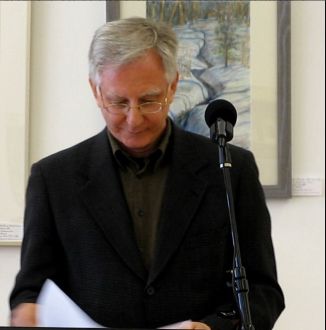
Bill Yarrow


Bill Yarrow, Professor of English at Joliet Junior College and an editor at the online journal Blue Fifth Review, is the author of The Vig of Love, Blasphemer, Pointed Sentences, and four chapbooks. His work also appears in the anthologies Aeolian Harp, Volume One; This is Poetry: Volume Two: The Midwest Poets; and Beginnings: How 14 Poets Got Their Start. He has been nominated eight times for a Pushcart Prize. More information about Bill can be found on his website: https://billyarrow.wordpress.com/

Valerie Fox Interview: Writers Room

Letters4ZoraPic
MHR: Hi, Valerie. Thank you for taking the time to answer our questions about Writers Room. Briefly, what is Writers Room and what is your affiliation with it?

VF:  Writers Room is an initiative at the Center for Neighborhood Partnerships in West Philadelphia, associated with Drexel University. It’s one of many initiatives there aimed at both connecting different community organizations and at helping individuals.  Writers Room, specifically, offers a regular writing workshop, as well as side-by-side classes in which both Drexel students and others from the community take part. Topics have included War Stories, Memoir Writing, and Poetry Writing. We’re in our third full year of programming.

I’m a faculty writing fellow with Writers Room, as part of my job teaching at Drexel University, and I get to offer workshops, help out with programming, and support the other teachers and our directors in their workshops and special events.

Colleagues I work closely with are Rachel Wenrick, Kirsten Kaschock, and Carol Richardson McCullough. We have a motto: Together, we are creating a shared story.

MHR: What are some of the ways Writers Room meets the creative community’s needs in Philadelphia?

VF:  Writers Room provides a space for writers to write and share work. A close-knit group attends monthly workshops, and special events are offered throughout the year, as well as one-on-one consultations.

A one-off workshop last year, for instance, was called Portraits through Time and combined writing and drawing.  We’re planning one for winter focusing on recording oral histories.


MHR:
Can you highlight events that Writers Room have marked you personally as transformative?

VF: I find that all my interactions at Writers Room are energizing. Carol has said about Writers Room: “that’s where the magic happens.” Writers come here and find a place where they are inspired to share their stories.

We also see the delight in the writers’ faces when they see their work in the anthologies and chapbooks we make together. Writers appreciate the challenging classes, the feedback from fellow writers, and the wonderful diversity and energy of this place. Seeing the positive impact of the younger (“traditional”) college students and community writers working together never gets old.

Seeing the seriousness and growth within our group reminds me why I write, too—to express myself, but also to reach and be read by an audience, to connect with others.

Our recent festival focused on Their Eyes Were Watching God by Zora Neale Hurston was incredibly gratifying and touched the lives of many hundreds of people.  It was part of the NEA Big Read program; more information on that here [http://www.neabigread.org/communities/?community_id=2250].

Our workshop members took part in numerous discussions and workshops. Additionally, we took the festival into many branches of the Free Library of Philadelphia, sharing Hurston’s work with both adult reading groups and kids. For the kids, we were able to share the picture book, about Hurston’s early life. The festival also included panels, a dance performance, a zine-making workshop, and more.

MHR:
Can you talk a bit about relationships that develop through the interactions in Writers Room?

VF: These and other events are a catalyst for collaboration amongst teachers and students, as well as groups and departments associated with Drexel. For instance, I’d been working on some collaborations with artist Jacklynn Niemiec (who also teaches at DU), and doing workshops with her at Writers Room has led to further collaborations and an energizing of my teaching practice overall.


MHR:
How can someone become involved?
VF: Our website lists events, and anyone from our area is welcome! For special events, like the Letter Press workshop last month, space may be limited, so it is important to reply or fill out a form as requested to ensure there is a spot for you for in cases like this.  If you are interested in getting involved, please to our website and sign up for announcements, or drop us a line!

Our website!

http://www.writersroom.online


Valerie Fox
Valerie Fox
‘s books include The Rorschach Factory, The Glass Book, and Poems for the Writing: Prompts for Poets (co-written with Lynn Levin). Much interested in collaboration, she has published many poems and stories with Arlene Ang. She is also part of group of Philadelphia artists combining dance, word, and visual arts in projects known as “Variable Space.” She has published in Juked, West Branch, Hanging Loose, Painted Bride Quarterly, Apiary, Sentence, Mead, and other magazines.

An Interview with Tyler Sheldon


MHR:
Thank you for agreeing to do this interview for MockingHeart Review, Tyler. I really enjoyed First Breaths of Arrival, your chapbook from Oil Hill Press. Can you tell me a bit about the genesis of the chapbook? How long was it in the making? How did you envision the collection?

TS: Hi, Clare and MockingHeart, thanks for having me! My chapbook began as a desire to collect my Plains poetry–my poems of place–into a cohesive unit with a large underlying narrative. I wanted to tell the story of my upbringing, and of my observations of Kansas–how it shapes the way I think, and my interactions with nature and individuals. Since around 2012, I’d been drafting and revising poetry along these lines, trying to be respectful of my place in the Midwest and my heritage there. I’d grown up around Kansas poets (my father, William Sheldon, is one, and so were several family friends), and so when I began in poetry it was both the most natural and most urgent direction to take.

I started First Breaths of Arrival while working on my Master of Arts in English at Emporia State University, and I knew I wanted it to be a shorter collection. It grew in tandem with my MA thesis, which focused on Kansas poetry (specifically that of William Stafford, Harley Elliott, and Steven Hind). As my collection grew more cohesive, I approached Oil Hill Press; editor John Jenkinson worked with me as I pared it down, replacing some poems with ones that fit better. Oil Hill released the chapbook to the world in May 2016, the day I graduated with my MA.

MHR: Landscape, place, specifically Kansas is featured strongly throughout and your treatment of it is done with a deft hand.  The poems tell us much about Kansas in what is said of it, in descriptions. Can you speak to the poem, “In Kansas,” and tell us a few things that are not said? Maybe lines or images you cut out of the poem? There are also “ghosts” and ancient people in this landscape. Can you speak to this how you drew them in as a poet?

TS: I’m glad to know the treatment of landscape and place is done well! Poems throughout First Breaths deal with the state and its landscape in various ways–“For Kansas Poets” links the landscape to its residents in behavior and thought. “In Kansas” deals specifically with unique Kansas imagery: the Hutchinson salt mine, for instance, is now a museum housing such artifacts as the costumes from Star Wars and Gone With the Wind. As you mention, there are several unsaid pieces of that poem, including Kansas’s influence on poetry at large, and how I learned to be (somewhat) adult while living there.

The line “throw clove cigarette butts into the street” speaks to a pastime I shared with my wife, whom I met in Kansas and was then dating. We’d go for late-night cruises in my Nissan or her Ford coupe, smoking clove cigars and sometimes stopping for take-out. More than that, though, this line hints at possibility; the disparate activities in the poem are examples, suggesting that in Kansas, much more opportunity for exploring oneself can be had. In a way, then, the whole poem is about unsaid truths or opportunities.

The “ancient people” of the Kansas landscape are integral–I’ve long been fascinated with Kansas history and its people. My father collects Native American and Paleolithic artifacts on the Arkansas River as a sort of compelled hobby, so I had early exposure to the evidence people leave of their lives. Former Kansas poet laureate Denise Low discusses her own Native ancestry in several collections of her work, and her explorations fed my fascination with the ghosts of our state. Addressing these through writing felt like both the best fit and a way to contribute to what is very much a place-centered poetic tradition.

MHR: Throughout the collection. there are the interrelationships of men and boys, specifically the speaker of the poems and his elders–father, grandfather. The relationships are drawn very realistically and finely. The notes of coming into manhood are struck purely. I especially loved the poem “Mountains.” Not that it matters to the poem’s truth, but how much of your family history plays into this poem’s narrative? It’s quite colorful. Also, can you speak to the metaphor of “mountains” as you employ it in this poem?

TS: Thanks for noticing the relationship focus! It’s there on several levels–for example, “My Father Teaches Me to Shave” is a true account, and if altered at all from factual happening it would be by my fallible memory rather than any poetic license. My father and I wrote “For Kansas Poets” together over a period of about two weeks, comparing drafts and working them gradually together into their current sonnet form.

“Mountains” is interesting in this regard, as during the time when my grandfather was telling me stories of his father, my own dad was there in the Suburban with us as we drove into the Rockies. So, in a way, four generations of the Sheldon family were present for Grandpa Bob’s stories. His father Hubert Sheldon really was a surprisingly good boxer, a baseball player, and a liquor store owner. And with him, people really did know not to mess around.

In the poem, itself, those mountains work on a surface level–they provide scenery, and context for the conversation that’s the backbone of the poem. They’re also metaphors, I suppose–as we went deeper into the mountains, up to Grandpa’s mountain cabin, we went deeper into family history, with its complexities and intrigue. Another trip to the Rockies is probably due at some point, as I’m sure I still have a lot to learn.

MHR: I think we really covered a great number of interesting points about your eloquent collection. Thank you! The only follow-up question I would ask is if you would speak to the metaphor of a mountain as it relates to a man as a figure/a mountain in a boy’s or young man’s life.

TS: I suppose that mountains have a certain place in boyhood, and probably manhood, as structures that inspire awe. To say, “I’ve been up there,” and certainly to say “I’ve been up there with my father and grandfather” is a point of pride for me–those visits to the mountains gained status as a tradition over time and influenced me. The mountains became a symbol of proving oneself in nature, though in my situation they were a sort of middle-landscape. I wasn’t roughing it, out there in a tent hunting for sustenance, but I did learn a bit from my grandfather about building powder rifles, and how to shoot properly, throw knives with accuracy, cut firewood, tend a stove, and so on.

I’d say those activities are inextricable from being in the Rockies, at least for me–I’m being a bit glib, but you can’t necessarily practice target shooting when you’re in a suburban neighborhood, for example. So yes, mountains have a place in my boyhood and very young adulthood, and one that I remain proud of.

~

Interested folks can buy Tyler’s chapbook, First Breaths of Arrival, by emailing him at tyrsheldon@gmail.com, or by emailing John Jenkinson (Oil Hill Press publisher) at jjenkinson@butlercc.edu.


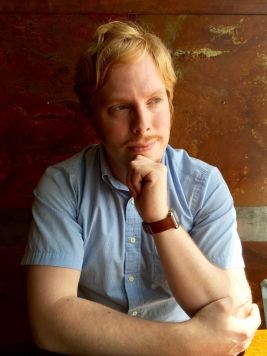
Tyler Sheldon


Tyler Sheldon is an MFA candidate in Poetry at McNeese State University. He earned his MA in English at Emporia State University, where he taught Composition and received the 2016 Charles E. Walton Essay Award. Sheldon’s poetry has been nominated for the Pushcart Prize and has appeared in journals throughout the US and in Canada, such as Quiddity International Literary Journal, The Dos Passos Review, Coal City Review, The Prairie Journal, and others. His chapbook First Breaths of Arrival is from Oil Hill Press (May 2016).

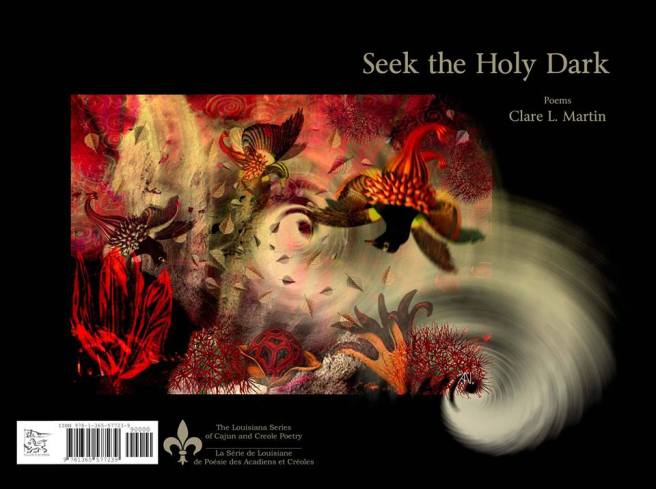
Clare L. Martin’s “Seek the Holy Dark”

cover-official
MockingHeart Review’s
 Editor, Clare L. Martin’s Seek the Holy Dark is the 2017 selection of the Louisiana Series of Cajun and Creole Poetry by Yellow Flag Press.

Seek the Holy Dark is now available for pre-order. Trade paperback, 66 pages, only $10. Pre-orders will ship in early February. To order click here.

Any new book of poems worth its salt must reinvent the intelligences of poetry: trope, word, image, argument, sentence, strophe, music. The poems in Clare Martin’s Seek the Holy Dark will keep. They are salt.

~Darrell Bourque, Former Louisiana Poet Laureate, author of Megan’s Guitar and Other Poems from Acadie and Where I Waited

From the holy dark of horror storms and freedom in the hand, to starving wolves and old women who live in woods, Clare Martin’s poetic imagery seeks in myth to locate depth of soul. She incants salvation “bone by bone” up from the shadows. Her writing has a beautiful fury, a hard questing and secret exultation that keep the reader poised and intoxicated. “Do you seek the heart too” the opening poem asks, and of course, we answer Yes and read breathlessly on. These poems “drop through this world/into dark awakening.” The strong-hearted will understand.

~Rachel Dacus, author of Gods of Water and Air

Seek the Holy Dark is a book of revelations in poems.  Clare L. Martin sees the richness and the poverty that are bedmates, proffers them as gifts, lays them at our feet.  Her poems suggest we join in the quest to be both humbled and exalted. Martin, who never looks away, fully understands the duality of nature, its light and darkness, exploring both in this lush and lyrical new collection.

~Susan Tepper, author of dear Petrov and The Merrill Diaries

Vol. 2, Issue 1 of MockingHeart Review

We welcome the new year with a brand new issue of MockingHeart Review. We’re completely enthralled with this issue and hope you will be too.  Please enjoy the issue and keep coming back to these pages as we will be presenting a new schedule of interviews and articles of interest to poets and readers in 2017.

With you in words,

The Editor


A note from the Editor

I want to share an opportunity with readers of MockingHeart Review. Recently I decided to use my expertise to develop a program of mentoring writers, and now I have expanded this program to address the needs of creatives in other disciplines. Please read on.

I give nearly 200% of myself during the eight weeks I work with mentees. I have numerous strategies to get creative juices flowing. If you find you need creative coaching, consulting on a creative writing project, editing insights, want to work one on one in your craft, or all of the above, consider engaging my services.Mentorships will be conducted through email, phone, and weekly consultations in person, if local, or via Skype link up to meet anyone across the miles.

The writing mentorships are structured courses that provide energetic and substantive relative-to-now literary conversations between the mentor and mentees. Great emphasis will be placed on craft and form.  The mentee should have expectations of fast-paced, rigorous writing and reflective, nurturing and honest feedback from a skilled and admired contemporary poet and publisher.

My second collection of poetry, Seek the Holy Dark, is forthcoming from Yellow Flag Press in 2017. My widely-acclaimed debut collection of poetry, Eating the Heart First, was published in 2012 by Press 53. My poetry has appeared in Avatar Review, Blue Fifth Review, Thrush Poetry Journal, Melusine, Poets and Artists, and Louisiana Literature, among others. I have been nominated for a Pushcart Prize, Dzanc Books’ Best of the Web, for Best New Poets and Sundress Publication’s Best of the Net. I am a lifelong resident of Louisiana and edit MockingHeart Review.

I am also a visual artist and offer mentorships for creatives of other disciplines that address breakthroughs in creativity, the creative process, creative problem solving and honoring the self as an artist in a hectic, sometimes dystopic world.

Other unique approaches to customized courses may be considered. Inquire with Clare at the email below or by phone. The number is listed below as well. I will always be honest with you if I feel your need would not match well with my expertise. But I will try my best to brainstorm on how it could.

Specific goals of the eight-week course will be decided upon in conversation prior to agreements being made to engage with me. It is encouraged that the course is structured as goal-oriented to produce visible and viable results.

The fee for the eight-week course is $250 US currency, (non-refundable due to course limits, serious inquiries only), payable through PayPal or by check. The spots are limited due to the very intimate work and close personal attention offered.  For more information, please email: clmpoetrymentor@gmail.com or call (337) 962-5886

Mentorships

Clare L. Martin, poet and MockingHeart Review editor and publisher, offers eight-week, one on one, poetry-writing mentorships with young and new poets that offer the promise of a sustained relationship beyond the initial intensive generative and critique-based working relationship. The mentorships are structured courses that provide energetic writing potentialities and substantive relative-to-now literary conversations between the mentor and mentees. Great emphasis will be placed on craft and form.  The mentee should have expectations of fast-paced, rigorous writing and reflective, nurturing and honest feedback from a skilled and admired contemporary poet and publisher.

Clare’s twelve-year track record of publishing her own poetry in both print and electronic literary journals and reputation as the author of two books of poetry give her insight into traditional and new media forms of publishing available to upcoming writers. Her guidance in these areas will be offered as well, emphasizing the importance of building meaningful relationships with editors in mutually respectful and beneficial ways. Challenges facing today’s poetry writers in the digital age will always be at the forefront of the conversations.


Session I (Booking now)

September 19th, 2016 through November 7th, 2016


Session II (Booking begins October 1st)

December 5th, 2016 through January 18th, 2017


The fee for the eight-week course is $225.oo US currency, (non-refundable due to course size limits, serious inquiries only), payable through PayPal. The spots are limited due to the very intimate work and close personal attention offered. Mentorships will be conducted through email, phone, computer/camera link up, on a selective basis, to meet anyone across the miles.

For more information, please email: clmpoetrymentor@gmail.com